
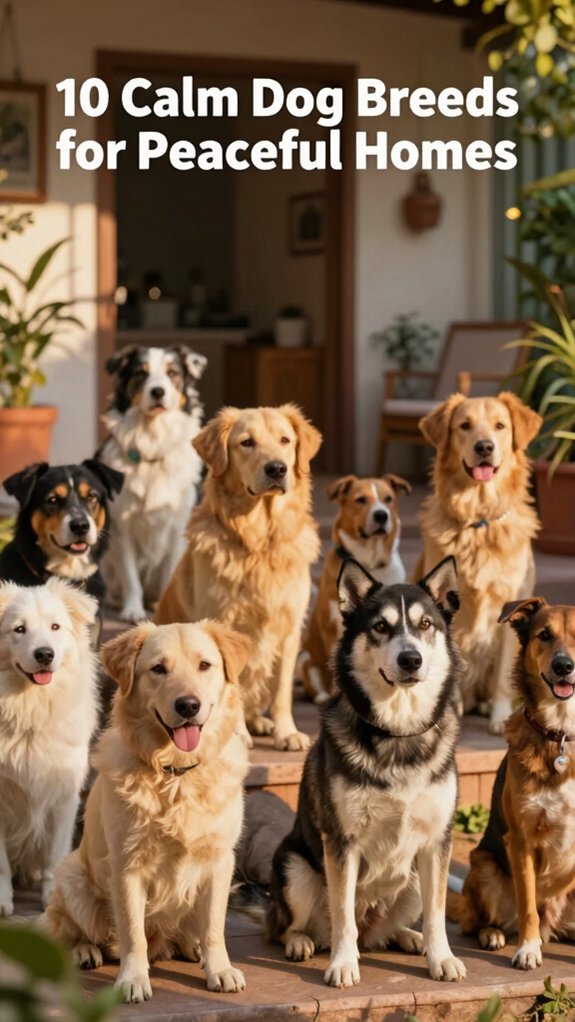
Calm dog breeds thrive on emotional steadiness, not laziness—think Cavaliers glued to your hip and Basset Hounds snoozing between walks. Bullmastiffs, Great Danes, and Bernese Mountain Dogs offer gentle giant vibes perfect for peaceful homes, while tiny Maltese and Shih Tzu companions cuddle without constant chaos. The trick? Consistent routines, mental enrichment like scent games, and honest time commitment prevent destructive meltdowns. Whether you’re dodging separation anxiety or managing a 180-pound lapdog, understanding each breed’s companionship needs transforms your household atmosphere entirely.
Disclosure: This post may contain Amazon affiliate links, at no extra cost to you. Content on Pawtangle is created with research support from AI tools and carefully reviewed, edited, and fact-checked by the lead author, Dr.Fahri Pat , to ensure accuracy and reliability. Learn more
Key Takeaways
- Calm breeds like Cavalier King Charles Spaniels and Great Danes exhibit emotional steadiness and low reactivity to noise and strangers.
- Companion toy breeds including Maltese and Shih Tzu require minimal exercise but need consistent companionship to prevent separation anxiety.
- Large gentle giants such as Bernese Mountain Dogs and St. Bernards adapt well to indoor living with moderate daily activity.
- Sighthounds like Greyhounds remain naturally quiet indoors, sleeping extended periods after short, intense daily sprints on safe surfaces.
- Calm temperaments require consistent routines, mental enrichment through training and scent games, and regular one-on-one bonding to thrive.
Calm Breed Traits: What to Look for in Temperament and Behavior
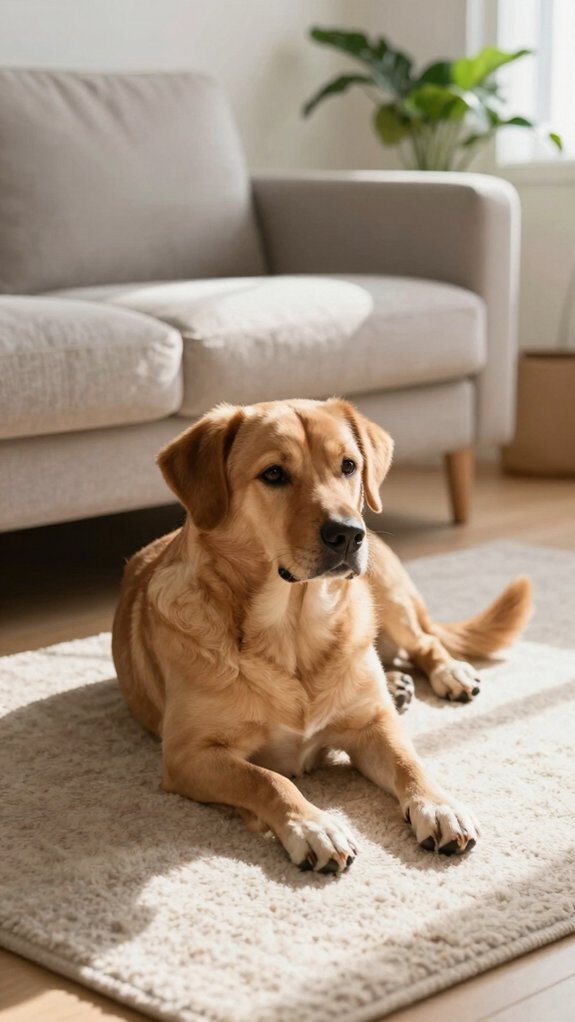
Most dog owners eventually realize that “calm” doesn’t mean “couch potato”—and that’s where a lot of people get blindsided.
When I’m helping families find their match, I look for specific calm-breed traits: low reactivity to strangers and noise, relaxed resting behavior at home, and that “Velcro dog” tendency to stick close. These dogs genuinely enjoy quiet moments with their people.
But here’s the plot twist—even chill breeds need consistent routines and mental enrichment. Skipping that? Boredom sneaks in fast, and suddenly your peaceful pup’s chewing your baseboards at midnight.
The real win comes when owners understand calmness as emotional stability, not laziness. That’s when everything clicks.
Basset Hound: The Scent-Trailing Lounger
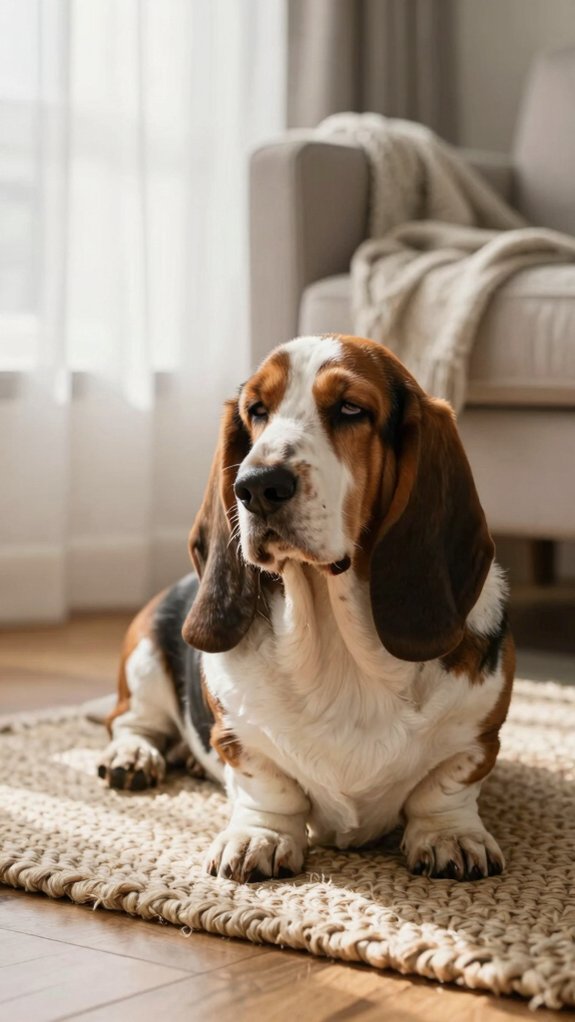
Think you’ve found the perfect couch companion, only to uncover your calm pup has vanished into the backyard following a scent trail you can’t even detect? That’s a Basset Hound. These low-energy loungers balance nose-driven independence with genuine love for home comfort.
Here’s what makes them tick:
- Second-best sniffers alive—their exceptional sense of smell drives independent exploration
- Food-motivated homebodies—they adore lounging indoors between leisurely walks
- Stubborn sweethearts—patient, positive training builds lasting cooperation
Bassets need moderate exercise, careful feeding to prevent obesity, and routine ear cleaning. They’re perfect for families wanting a calm, quirky companion who occasionally ditches you for an invisible scent adventure—then happily returns for nap time.
Sighthounds: Sprint and Sleep Specialists
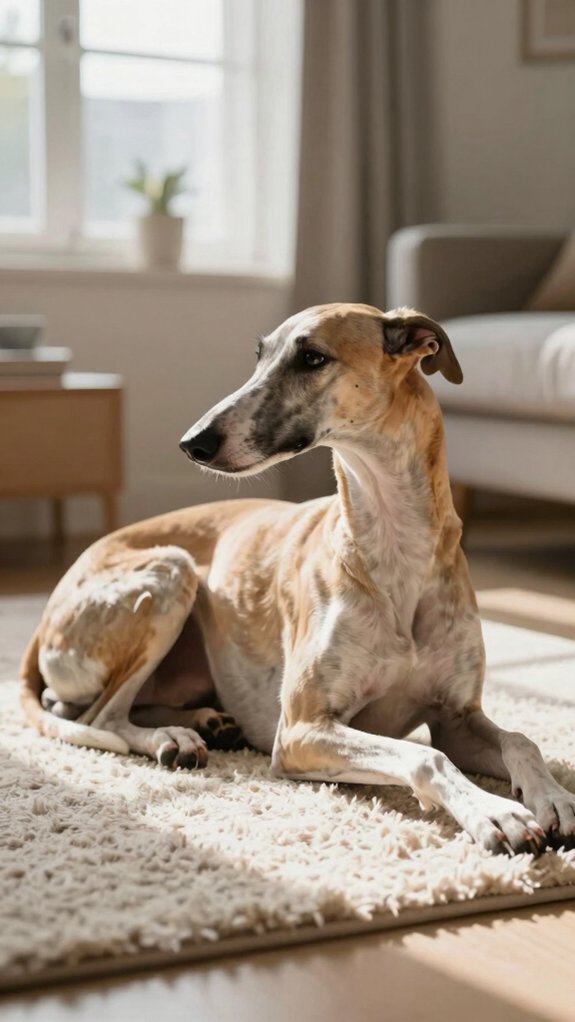
Watching a Greyhound explode across a dog park at 45 miles per hour, then return home to sleep for sixteen hours straight—that’s the sighthound paradox I see constantly in my practice.
These lean athletes need short, intense sprints followed by long rest periods. Here’s what works: schedule one daily off-leash run on sprint safe surfaces like grass or dirt—concrete damages their deep chests. Then let them crash indoors.
Indoor enrichment routines matter too. Scent games and obedience work keep minds sharp without exhausting bodies. Sighthounds are naturally calm, quiet housemates. That’s your secret weapon for peaceful living.
Cavalier King Charles Spaniel: The Velcro Companion
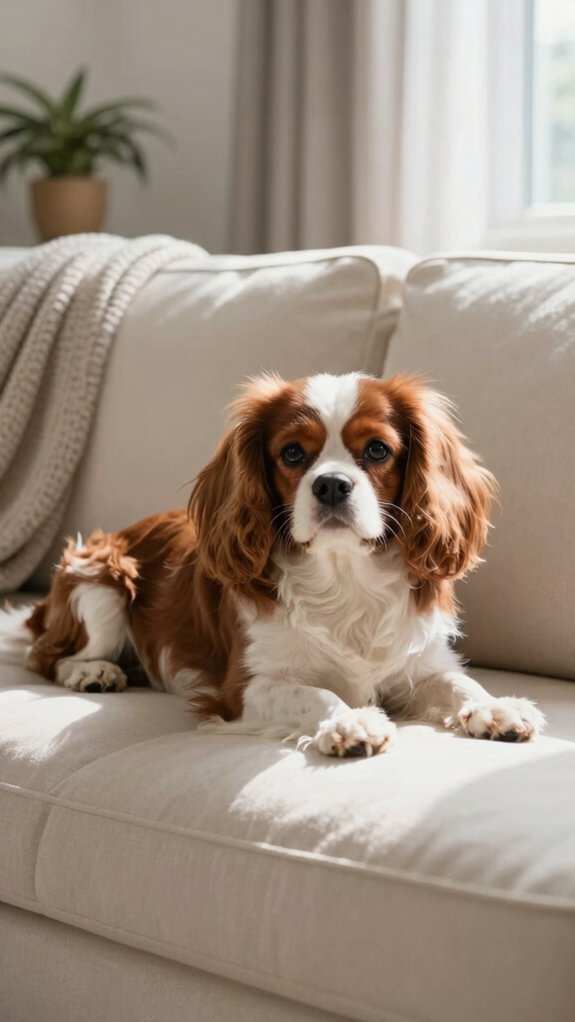
If you’ve ever wondered why some dogs seem surgically attached to their owners’ sides, meet the Cavalier King Charles Spaniel—a breed literally designed centuries ago in royal courts to be a people-pleaser with those soulful eyes and gentle nature. These pups aren’t just calm; they’re the definition of a “Velcro companion,” meaning they’ll follow you from the kitchen to the bedroom without complaint, which makes them incredible for families seeking that peaceful, bonded energy in their homes. What makes them especially suited for calm households is their low-to-moderate exercise needs and natural gentleness with kids and multiple family members—though here’s the real talk: that strong desire to be with you means they need your actual *presence*, not just a cozy bed to crash on.
Royal Heritage And Origins
Ever notice how some dogs seem physically incapable of letting you out of their sight—like they’re genuinely convinced you’ll vanish the moment you step into another room?
That’s the Cavalier King Charles Spaniel, bred centuries ago as Renaissance companions for British royalty. Their lineage traces directly to King Charles I and II, embedding aristocratic iconography into their very DNA. These lap dogs weren’t accidents—they were deliberately crafted for closeness.
- Royal breeding developed their need for constant human contact
- Aristocratic households molded their gentle, people-pleasing nature
- Centuries of selection created today’s devoted “Velcro” dogs
Understanding this heritage explains why they struggle alone.
Gentle Temperament For Families
Cavalier King Charles Spaniels consistently rank among the easiest dogs to live with, and honestly, it’s because they’re hardwired to be your shadow rather than your headache. Their gentle nature makes them naturally suited for families with children. These dogs thrive when households establish child-friendly routines and consistent boundaries. Early socialization prevents anxiety issues down the road. What makes them special isn’t just patience—it’s their genuine desire to belong alongside you. They’ll happily curl up during homework time or nap through afternoon chaos. This breed genuinely wants to be part of your family’s everyday moments, asking only for presence and love.
Maltese and Shih Tzu: Tiny Cuddle Experts
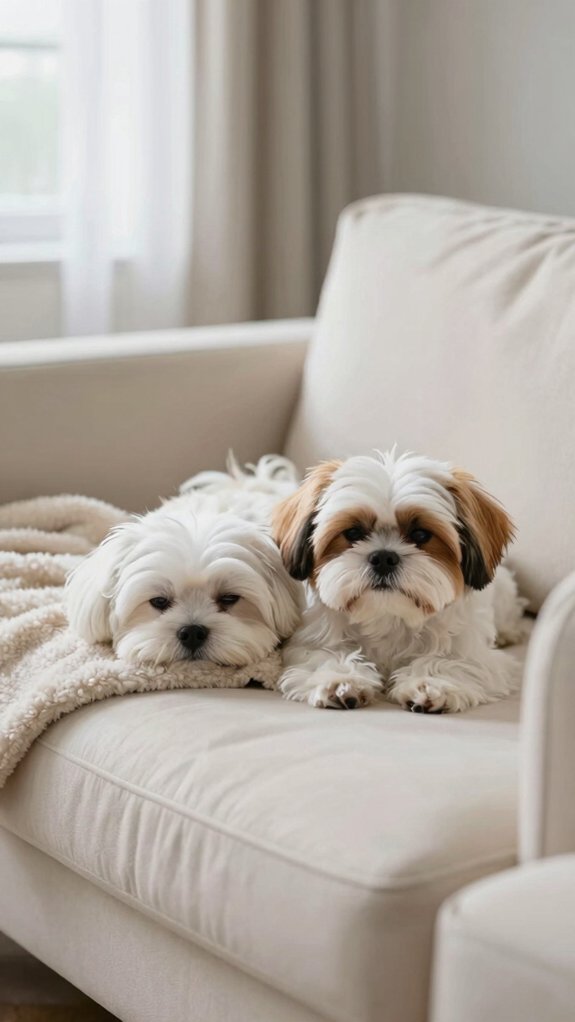
When you walk into a room and your dog practically glues itself to your lap within seconds, you’ve probably got yourself a Maltese or Shih Tzu—breeds that have genuinely mastered the art of being tiny cuddle experts.
Why These Breeds Win Hearts:
- Coat maintenance keeps them looking adorable but demands regular grooming sessions that double as bonding time
- Low exercise needs mean short walks satisfy them completely, leaving more cuddle hours
- Vocal tendencies remind you they’re present, though training mellows this tendency
Both breeds hate solo time, so they’re perfect for people seeking constant companionship. Their calm temperament transforms any home into a peaceful sanctuary where laps become permanent dog real estate.
Great Dane: Surprisingly Low Energy for a Giant
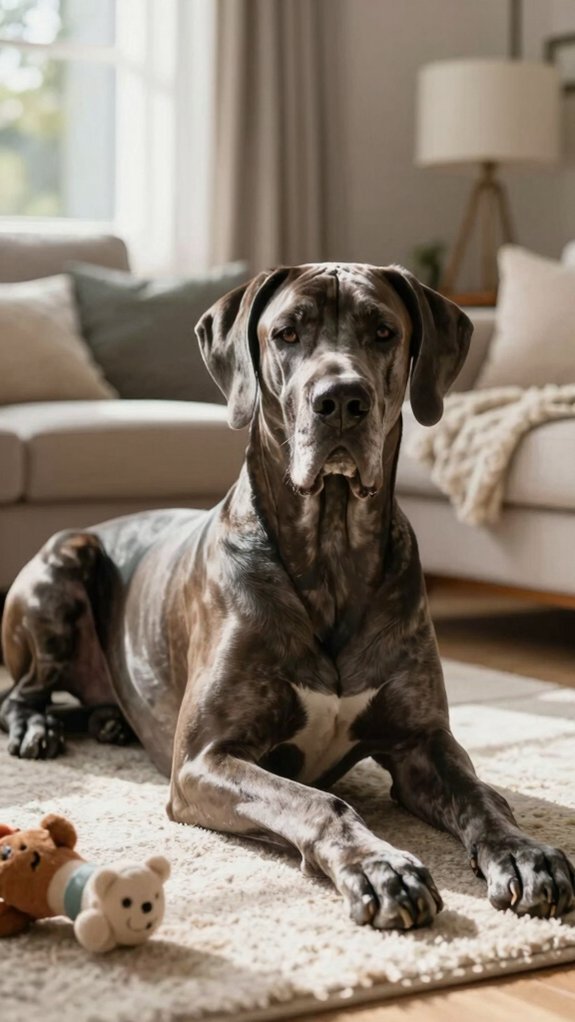
Most people assume that a dog weighing 140 to 175 pounds needs a backyard the size of a football field and enough exercise to tire out a marathon runner—but here’s where Great Danes flip the script entirely. These gentle giants actually thrive on just 1–2 hours of daily exercise, making them surprisingly suited for apartment suitability. Their calm temperament means they’d rather curl up beside you than sprint endlessly. Before committing, consider feeding considerations—large-breed kibble adds up quickly—and potential health issues like hip dysplasia. With proper early socialization and training, Great Danes become the peaceful companions perfect homes genuinely need.
Bernese Mountain Dog: Sturdy Cuddle Partner
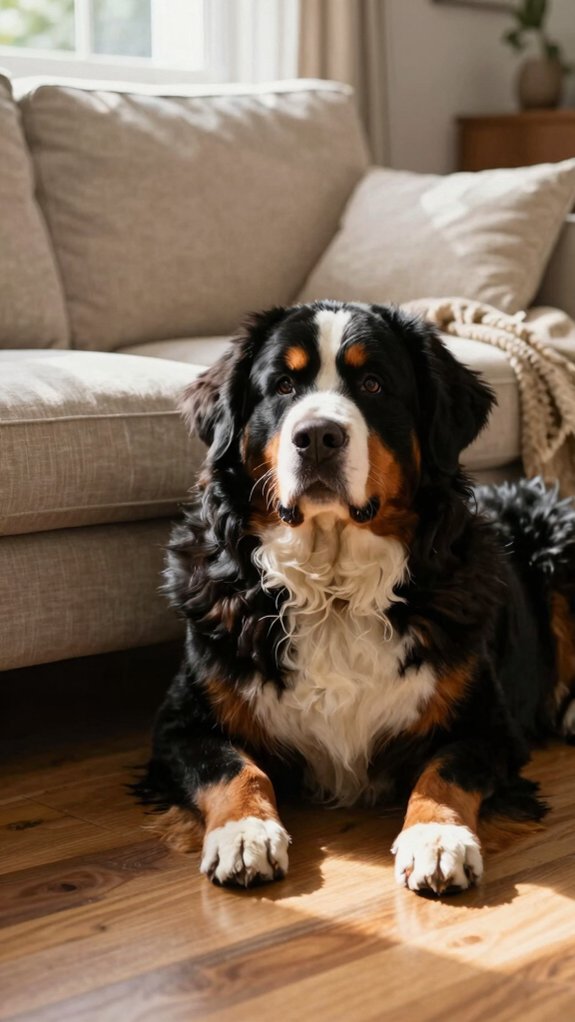
If you’ve ever wanted a dog that actually *wants* to spend time with you instead of ignoring you from across the room, the Bernese Mountain Dog might be your answer—these gentle giants are famous for their calm, even-tempered nature and genuine love of being close to their favorite humans. I’ve seen Berners literally follow their owners from room to room just to be nearby, which honestly makes them perfect for anyone craving a real companion rather than just a pet. Their placid temperament means they’re not the type to bounce off your walls, but they do need quality time and regular gentle exercise to stay happy and healthy.
Placid Nature And Temperament
Envision this: you’re scrolling through dog breed videos at 11 p.m., looking for something—*anything*—that won’t turn your living room into a chaos zone.
That’s where Bernese Mountain Dogs shine. Their placid nature makes them natural stress reduction techniques for anxious households. A solid temperament assessment shows these gentle giants rarely bark unnecessarily.
What makes them peacefully perfect:
- Low-key energy—they’re happy with gentle walks, not constant stimulation
- Bonding without chaos—they cuddle without knocking things over
- Predictable behavior—no surprise meltdowns or destructive episodes
I’ve watched families with Berners finally exhale. Their calm presence genuinely transforms homes.
Quality Time With Humans
Bernese Mountain Dogs don’t just *live* in your home—they become furniture, fundamentally. These gentle giants thrive on bonding rituals that transform daily routines into connection moments. Weekly grooming sessions? Perfect for deepening your bond while managing their thick coat. Long, leisurely walks create engaging enrichment opportunities where they genuinely enjoy your company. Unlike high-energy breeds demanding constant play, Berners prefer quality over quantity—they’ll follow you room-to-room, content simply being near you. Regular one-on-one time prevents separation stress. The magic happens during calm cuddle sessions after exercise, when they’re ready to lean into you completely. That’s when peaceful homes truly form.
St. Bernard: Teddy Bear With Moderate Needs
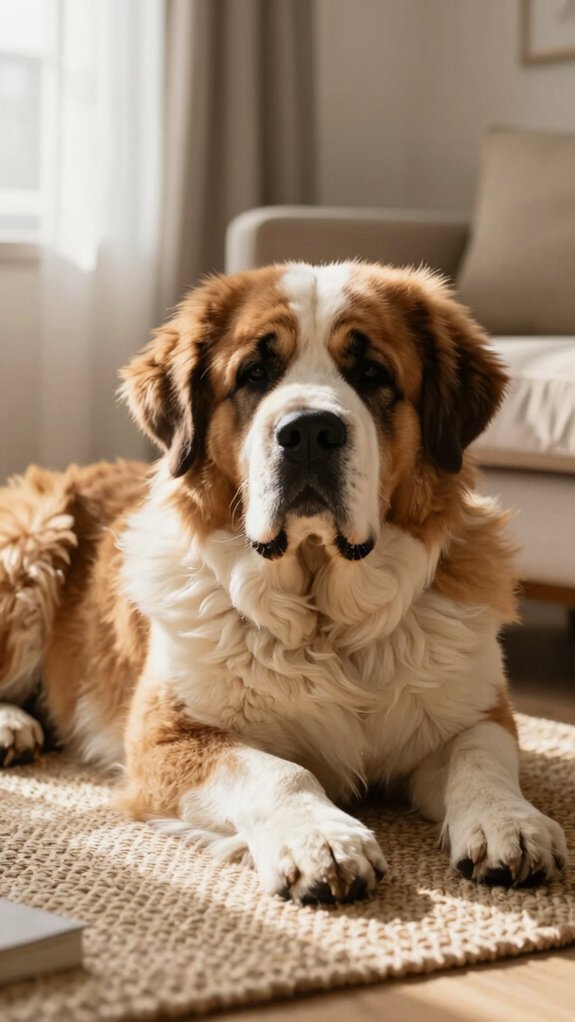
The gentle giant’s reputation isn’t hype—it’s built on generations of family dogs who’d rather nap beside you than knock over your coffee table. St. Bernards thrive in homes seeking calm companionship without Olympic-level energy demands.
What makes them peaceful housemates:
- Low-to-moderate activity needs (20–60 minutes daily walks keep them content)
- Teddy-bear temperament that bonds deeply with families
- Predictable, gentle behavior minimizing household chaos
Their thick double coats demand a solid grooming schedule to manage shedding and prevent matting. Combined with thoughtful feeding considerations for their 120–180+ pound frames, St. Bernards reward owners with unshakeable loyalty and serene companionship.
Bullmastiff: Loyal Protector Who Hates Solitude
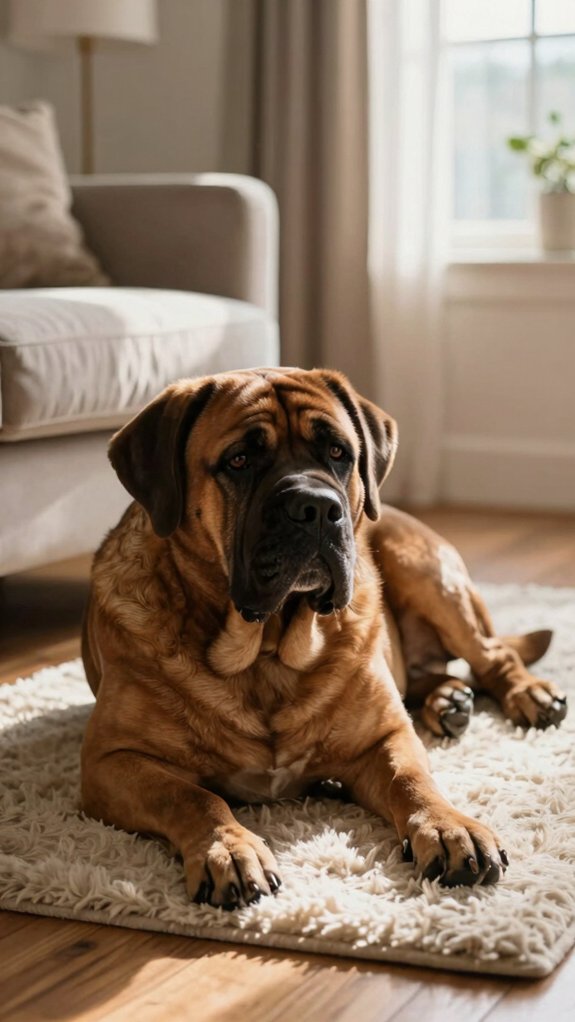
The Bullmastiff is that paradox every guardian-breed lover faces: a genuinely calm, protective dog who’d rather shadow you from room to room than spend an afternoon solo. What makes them special is their rock-solid loyalty and steady temperament—they’re not hyperactive or unpredictable—but here’s the catch: leave one home alone for eight hours and you’re asking for separation anxiety that shows up as destructive behavior or distress barking. If you work long hours or travel frequently, this breed will make you regret it with every chewed baseboard and neighbor complaint.
Calm Yet Protective Nature
Balancing a gentle giant with serious protective instincts sounds like a contradiction, but Bullmastiffs pull it off in a way that surprises most people. Their territorial instinct kicks in smartly—they don’t bark constantly or patrol obsessively. Instead, selective guarding means they stay calm indoors while remaining alert to genuine threats.
- Low-energy loungers who bond deeply with family
- Protective without aggression when properly trained
- Watchful presence that feels reassuring, not anxious
What makes Bullmastiffs special is their quiet confidence. They’re the friend who has your back without needing drama. Early socialization guarantees that protective nature stays controlled and appropriate, creating trustworthy guardians who fit peacefully into your home life.
Separation Anxiety Challenges
Most Bullmastiff owners learn the hard way that their gentle giant transforms into a velcro dog the moment the front door closes—and I mean *transforms*. These loyal protectors absolutely despise solitude, often expressing their unhappiness through destructive behavior, frantic barking, or escape attempts.
The key? Early conditioning and predictable departures. Start with short absences—literally five minutes—then gradually extend them. Keep your goodbye routine identical each day so your Bullmastiff knows what to expect. Crate training creates a safe den-like space, reducing panic.
For working owners, dog walkers or daycare break the monotony. Severe cases warrant a veterinary behaviorist’s expertise.
Ideal Owner Requirements
Before you fall in love with those adorable wrinkly jowls and massive paws, here’s what I tell people in my clinic: owning a Bullmastiff is like taking on a 130-pound shadow that refuses to leave your side—and I mean *refuses*.
These loyal giants need compatible living situations where someone’s actually home. This ownership commitment isn’t negotiable. Here’s what real Bullmastiff life looks like:
- Constant companionship—they follow you room-to-room, even to the bathroom
- Daily leadership and early socialization—non-negotiable for peaceful households
- Moderate daily exercise plus mental stimulation—two walks keep them balanced
Bottom line? Bullmastiffs belong with present, committed families who value their protective bond above convenience.
Activity Needs in Calm Breeds: Preventing Weight Gain and Behavioral Issues
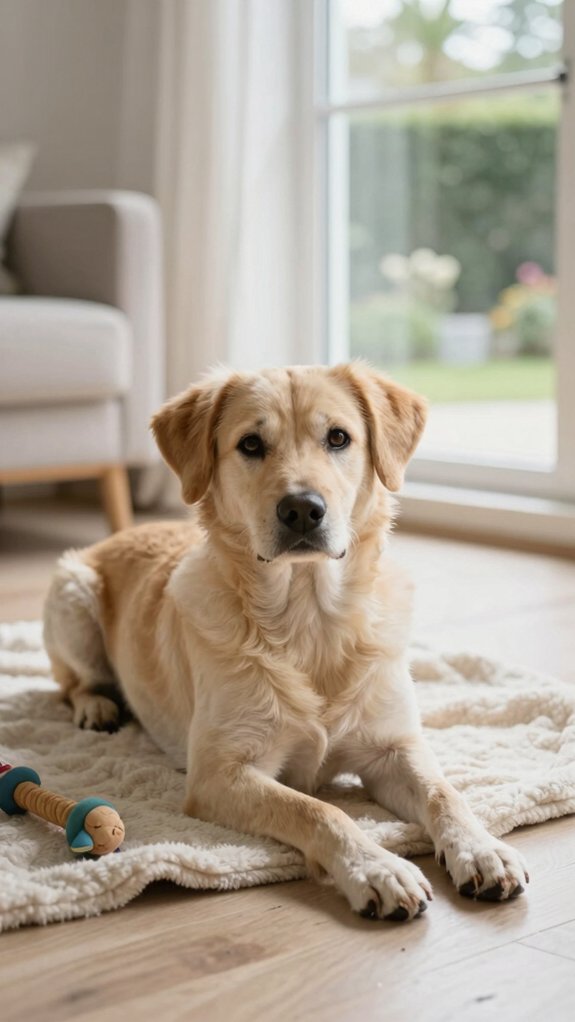
Through years of watching calm-natured dogs settle into their favorite spots on the couch, I’ve noticed something that catches most owners off guard: even the laziest, most laid-back pups still need regular movement to stay healthy and happy.
Basset Hounds and Cavalier King Charles Spaniels require 20–60 minutes of daily walks to prevent obesity. Structured play sessions combat anxiety-driven overeating and destructive behaviors common in toy breeds. Large gentle giants like Great Danes benefit from 1–2 hours of low-impact activity daily.
Here’s the real game-changer: portion control matters tremendously. Calorie needs vary wildly—a sedentary small breed may need 40% fewer calories than an active counterpart. Consult your vet about target weight and activity goals for lasting results.
Frequently Asked Questions
What Is the Friendliest and Calmest Dog Breed?
The Cavalier King Charles Spaniel stands as the friendliest and calmest breed, rivaling the Golden Retriever in temperament. Its gentle, people-oriented nature makes it the perfect companion for those seeking a devoted, peaceful family member.