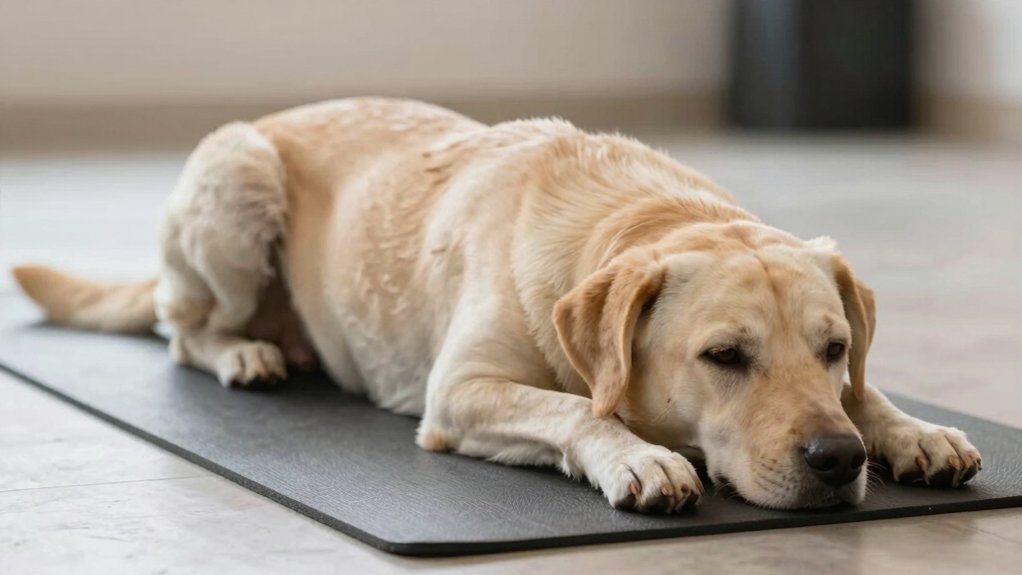
Teach the down cue with a reliable sit, a clear marker, and pea-sized treats. In a quiet room after exercise, say “Down” as the dog lowers, then lure from the nose straight down and slightly forward in an L shape until the elbows and chest touch the floor. Mark that instant and reward while fully down. Use a matching hand signal, then fade the lure and practice in new places with brief, successful sessions. More detail follows below.
Disclosure: This post may contain Amazon affiliate links, at no extra cost to you. Content on Pawtangle is created with research support from AI tools and carefully reviewed, edited, and fact-checked by the lead author, Dr.Fahri Pat , to ensure accuracy and reliability. Learn more
Key Takeaways
- Start with a reliable sit, then lure the dog’s nose straight down and slightly forward into a down.
- Mark the exact moment elbows and chest touch the floor, then reward immediately while the dog stays down.
- Keep training sessions short, calm, and frequent, using high-value treats and a clear cue like “Down.”
- Fade the lure gradually by using the same hand path with an empty hand, then add the verbal cue consistently.
- Practice in different rooms and mild distractions until the dog responds reliably in each setting.
What You Need To Teach A Down
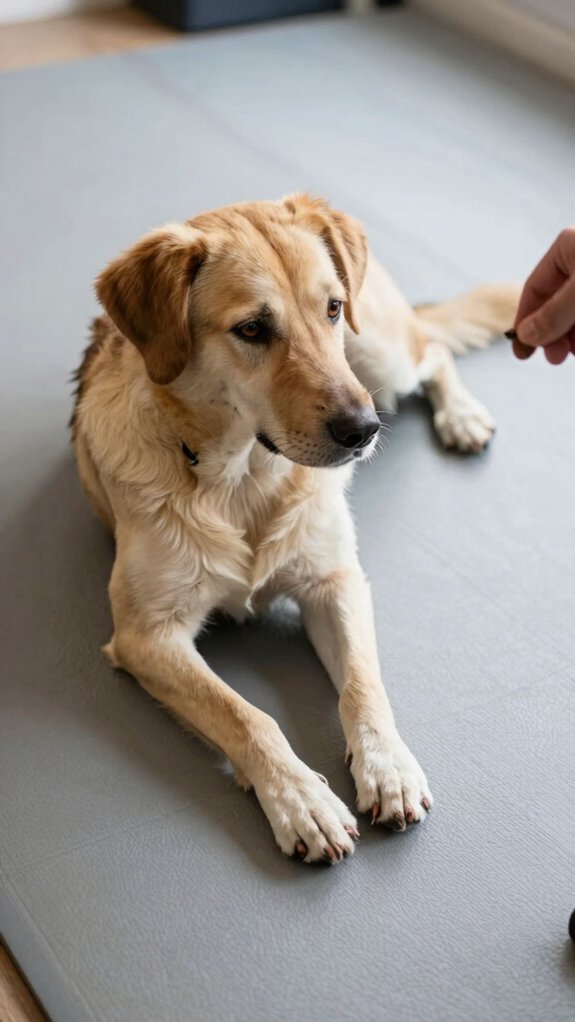
To teach a reliable down, the trainer should prepare a small set of high-value soft treats cut into pea-sized pieces, along with a clicker or other clear marker word to pinpoint the exact moment the dog lowers itself. A consistent cue, such as “Down,” and an open-hand lowering signal should be selected before practice begins. Sessions work best on carpet or grass, in a quiet home or garden, after exercise, with treat storage ready and a fixed training schedule of 3–5 minutes, 2–3 times daily. Praise or toy rewards should also be available for later fading of food lures.
Why A Down Cue Matters
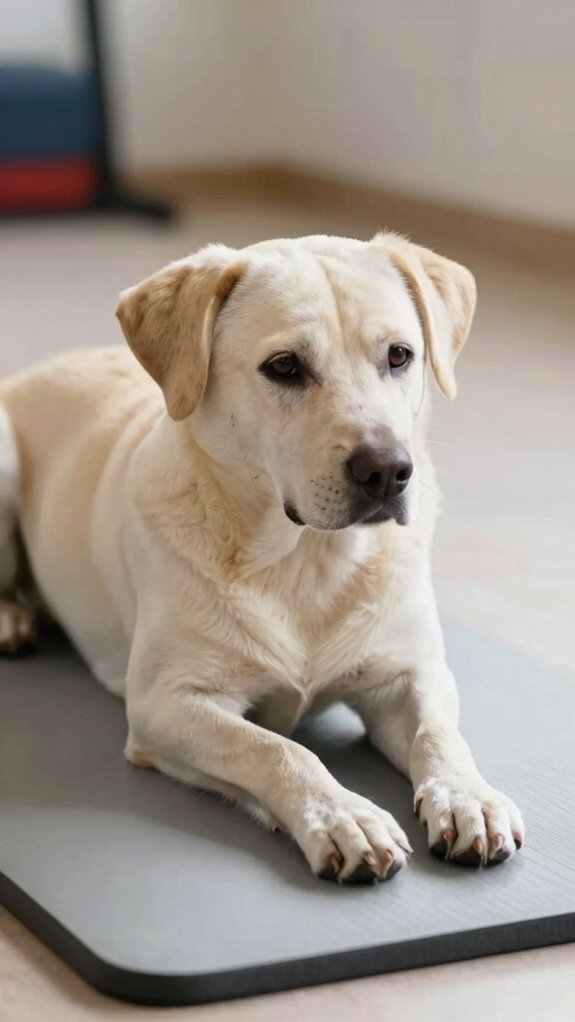
A reliable down cue gives a dog a controlled way to remain in place for longer periods than a sit, which often breaks down under pressure. Its safety benefits are substantial during veterinary exams, guest arrivals, or proximity to hazards, where steadiness matters. The behavior also supports stress reduction by giving the dog a predictable, calm response that can replace restless movement. In distracting settings, a dog that lies down is less likely to bolt or climb on people, improving off-leash reliability and recall management. Clear verbal and hand signals, practiced broadly, strengthen dependable performance and help the dog feel included.
Start With A Reliable Sit
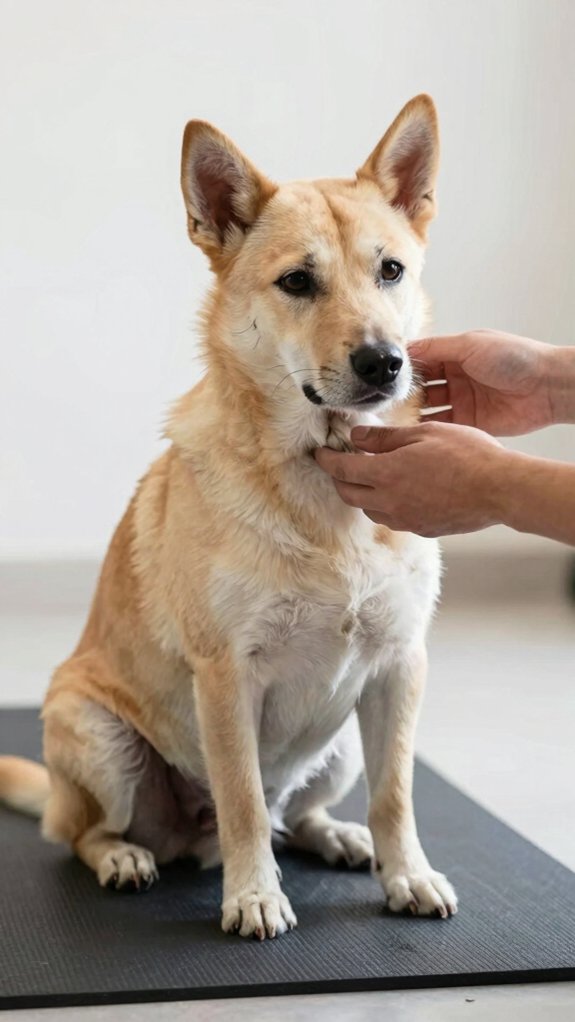
A reliable sit provides the foundation for teaching a down because it stabilizes the dog’s body and reduces unnecessary movement. The sit cue should be reinforced until the dog holds position calmly for several seconds, ideally in short, focused sessions. Once the sit is consistent from both stationary and moving starts, the down can be built directly from that anchor.
Reliable Sit Foundation
A stable sit should be established before down training begins, with the behavior reaching roughly 8–9/10 reliability—meaning it is performed correctly in 8 to 10 consecutive trials—so the dog has a clear, dependable starting position and is less likely to become confused or add extra movement. Strong sit consistency supports group confidence in the training process, and calm handler posture helps maintain clarity. 1. Use a nose-to-overhead lure with high-value treats. 2. Reinforce brief 2–5 second holds in varied rooms and mild distractions. 3. Keep one clear sit signal, rewarding from the opposite hand to preserve cue precision.
Sit Before Down
Once a sit is reliable, it can serve as the starting position for down training because it limits unnecessary movement and gives the dog a clear cue context. Short, frequent sit sessions should continue until the dog offers the behavior on cue about 8–10 times with consistency. A distinct sit cue and open-palm hand signal support understanding. This foundation improves body awareness and supports mat training by establishing a predictable posture. If the dog resists the shift, the sequence may be backed up and rebuilt from standing or through shaping. Varied locations and mild distractions help preserve reliability.
Build From Sit
With a reliable sit in place, the dog can begin down training from a predictable starting position: the handler asks for a sit, waits for the posture to hold steadily for several seconds, then presents a high-value treat at nose level and lowers it straight down and slightly forward so the dog follows into a down. This method supports calm learning and clear body language.
- Reset immediately if the sit breaks; stability precedes progress.
- Use progressive rewards for smaller, successful movements toward the floor.
- Mark “Down” as movement begins, then reward, and fade the lure later.
Lure Your Dog Into A Down
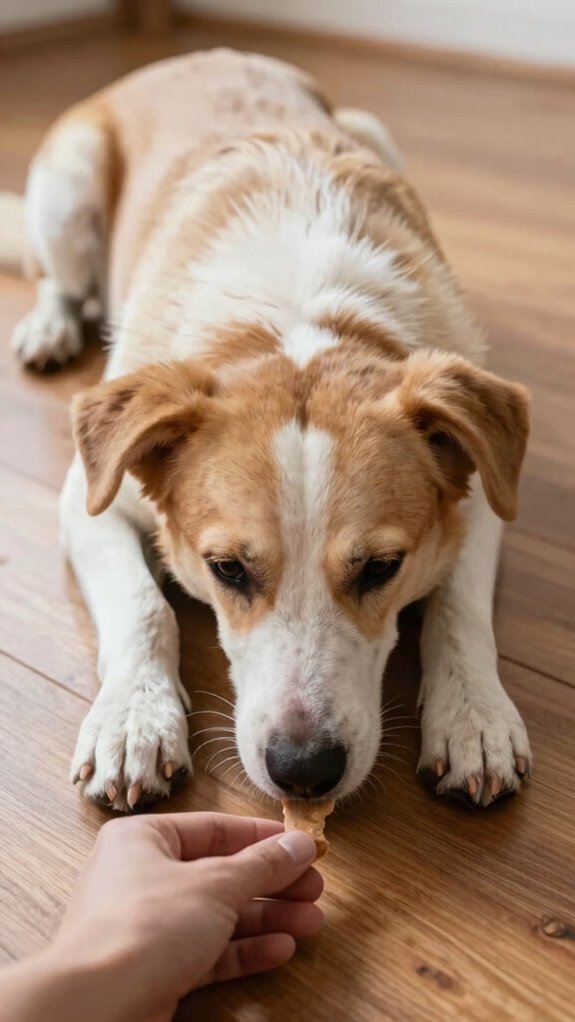
From a reliable sit, a high-value treat should be held at the puppy’s nose and guided slowly to the floor between the front paws. The motion should form a controlled path that lures the dog into a full down without physical pressure. As soon as the chest and elbows contact the ground, the behavior should be marked and rewarded while the dog remains in position.
Start From Sit
To teach a down from a sit, the dog is first positioned in a sit, then a high-value treat is held at nose level and moved slowly in an “L” shape between the front paws toward the floor so the dog follows it into a full lie-down. This controlled start supports clear shift cues and consistent mat placement, helping the dog understand the expected posture.
- Keep the lure near the chest, just out of reach.
- Mark and reward immediately while fully down.
- Repeat brief, successful sessions until smooth, then add the verbal cue and fade the lure.
Guide Treat To Floor
Once the dog is reliably sitting on cue, the next step is to guide a high-value treat from nose level down in an “L” shape, first toward the chest and then along the floor between the front paws. This nose guidance should keep the lure just out of reach, encouraging elbow flexion and a full body drop rather than neck stretching. Consistent floor targeting helps the dog follow the motion smoothly into a down. Mark the moment the elbows touch ground, then practice brief repetitions in a quiet setting. Gradually reduce visible food while preserving the same downward hand path for reliable compliance.
Reward The Down
Hold a high-value treat at the puppy’s nose, then move it slowly down between the front paws and along the floor in an “L” shape so the dog follows into a lie-down. Reward the instant the elbows touch ground; precise timing consistency strengthens learning and emotional reinforcement. Keep the treat low until the dog remains settled, preventing a quick push-up.
- Mark the down immediately.
- Reward from the opposite hand, then fade the lure with an empty hand signal.
- Add “Down” as the movement begins, and practice short, frequent sessions after exercise so the puppy stays included, confident, and cooperative.
Add The Hand Signal For Down
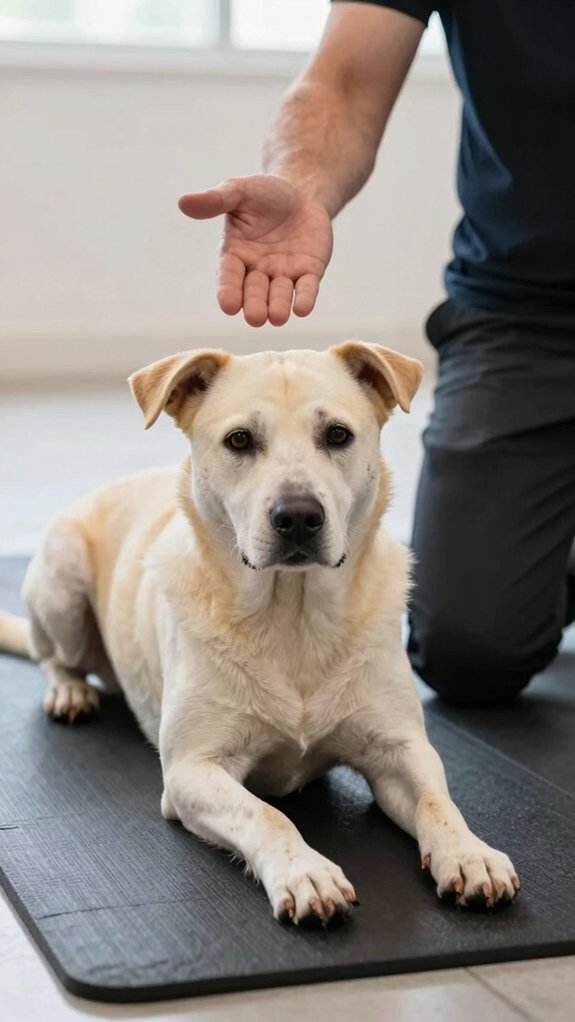
A clear hand signal can be introduced by lowering an open palm from chest level straight toward the floor as the dog is lured into the down, so the visual cue matches the movement already being followed. This hand motion should remain consistent in palm orientation, path, and speed. As skill improves, visual cue fading begins: reward with the opposite hand while the signal hand stays empty. In short sessions, practice at home, in the yard, and at the park until about 8/10 responses are correct. Maintain accuracy, stop rewarding if the dog rises, and build reliable control together.
Say “Down” At The Right Moment
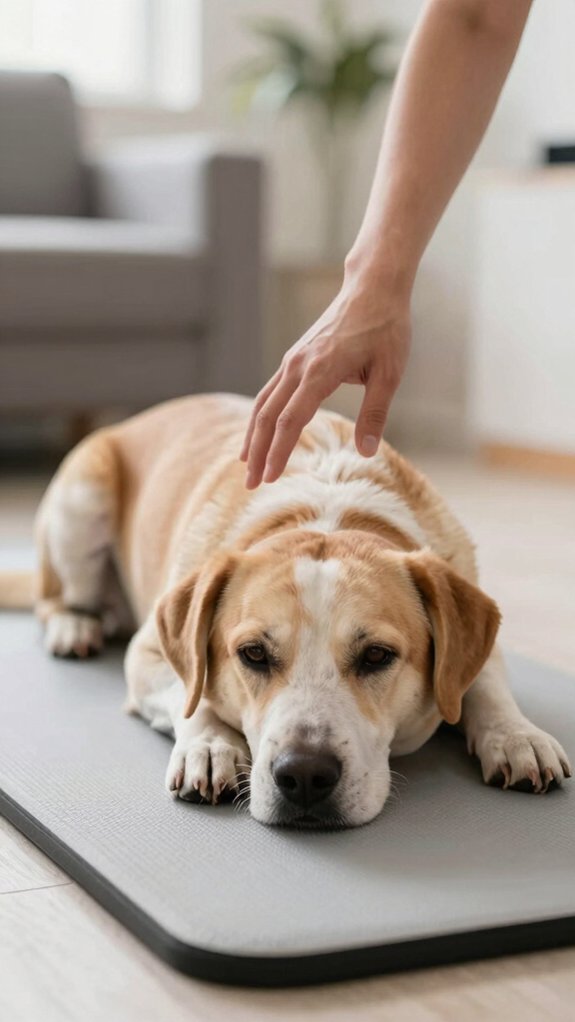
The handler says “Down” just as the dog begins to lower into the lying position, or within the final second of the lure, so the word is paired with the action itself rather than with a finished down. This timing precision supports clear learning and reduces confusion. Add the cue after the behavior occurs reliably about 8–10 times in a session, then maintain vocal economy: one neutral, calm cue per attempt.
- Cue only at the final full lie-down during shaping.
- Avoid repeats; repetition weakens the association.
- Fade the lure by cueing before the hand signal and building cue-alone responses.
Reward The Down Without Losing Position
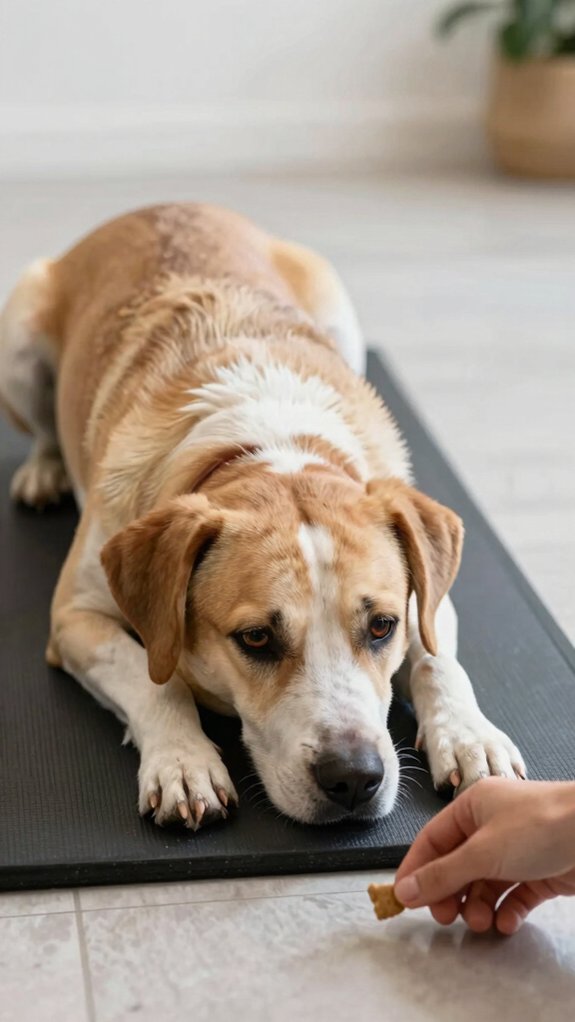
Rewards should arrive while the dog remains fully in the down, with the treat placed near the chest or on the floor so the dog stays lying to eat. Small, high-value morsels support precise reinforcement without excess calories. If the dog begins to push up, the reward is withheld until all elbows stay grounded, preserving position fidelity. Eye contact can confirm readiness, but the body should remain settled. Energy management improves when rewards are spaced from 2–3 seconds to longer intervals. Praise may continue, and treats may later come from the opposite hand or be tossed gently forward.
Shape A Down In Small Steps
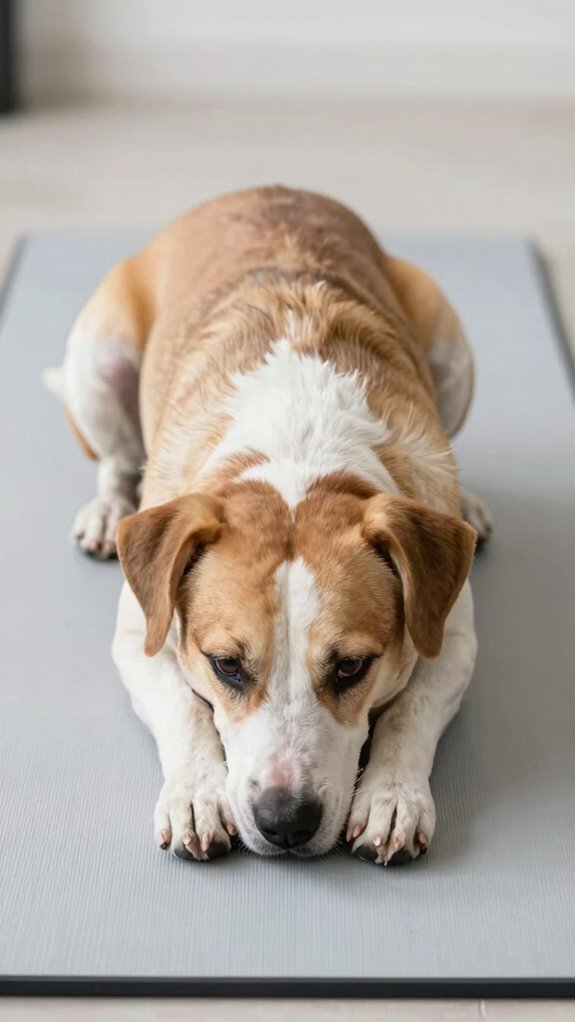
A down should be molded through small, measurable increments, beginning with an easy behavior the puppy already offers, such as lowering the head or transferring weight back. Each approximation should be marked immediately and rewarded before the next criterion is added, so progress remains clear and reliable. Difficulty should increase only when the current step is performed consistently, with the verbal cue and lure introduced later, after the full down is stable.
Small-Step Progression
By shaping the down in tiny, sequential steps, training becomes easier for the puppy to understand and for the handler to reinforce accurately. A stepwise progression supports body awareness and progressive duration, beginning with a behavior already frequent, such as head lowering. 1. Seize or lure the first motion, then confirm reliability before advancing. 2. Add each new component: elbows, weight shift, then full lie. 3. Briefly pause, then combine steps only when performance is steady. As control improves, fade the lure, cue the movement, and maintain occasional perfect repetitions so the team stays synchronized.
Reward Each Stage
Once the down has been split into manageable stages, each stage should be rewarded as soon as the puppy offers it reliably. The handler marks the first consistent step, then delivers high-value treats with calm praise while the puppy remains in position. Exact timing matters: click or praise at the instant the chest lowers, elbows tuck, or the full lie appears. Progress should occur only after about 8 of 10 correct responses, with timing drills used to sharpen consistency. The lure fades gradually by transitioning rewards to the opposite hand or an empty hand signal, preserving clear reinforcement and preventing pressure.
Capture Natural Downs
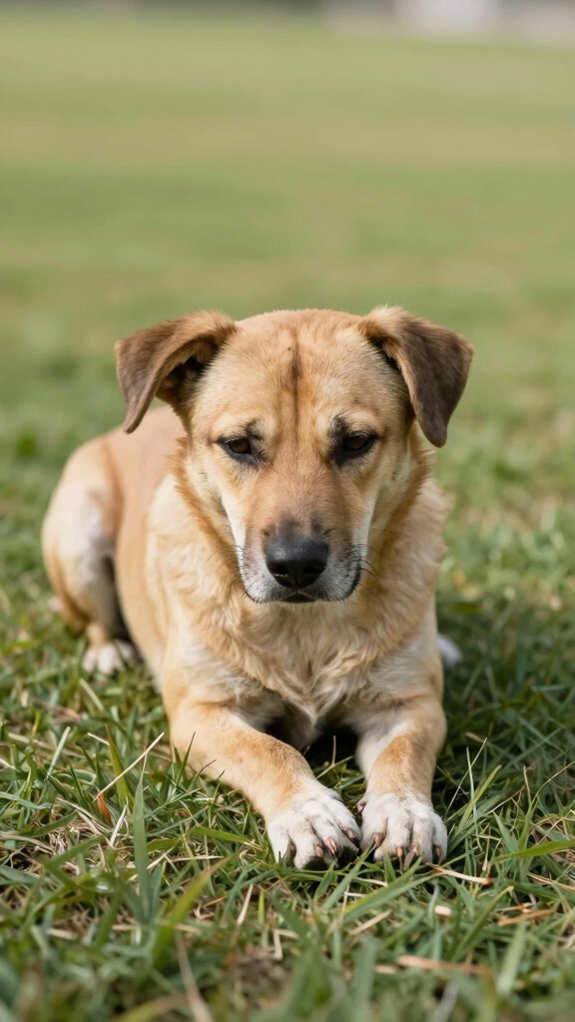
When a puppy naturally lowers into a down, the handler should immediately mark and reward the behavior with a high-value treat or favored toy, reinforcing the action before it disappears. Use timing markers and watch environmental cues such as sighing, elbow lowering, or stretching. Reward the instant the body starts descending, then deliver the reinforcement while the dog remains fully down to prevent a push-up. Add a brief verbal cue or hand signal just before the expected down. 1. Capture only clear, complete downs. 2. Repeat across rooms and surfaces. 3. Aim for 8/10 reliable responses before generalizing.
Keep Training Sessions Short
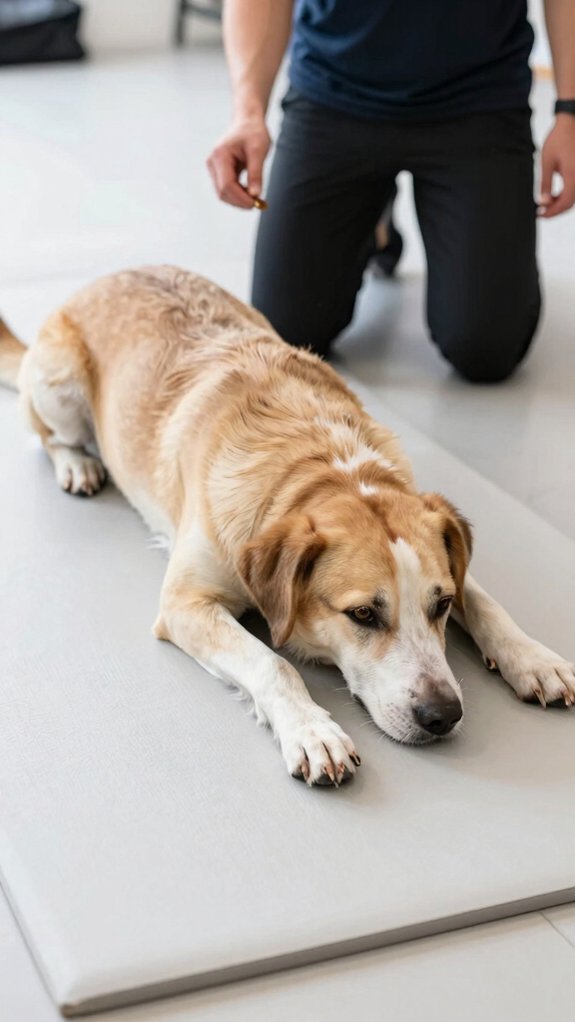
Training sessions should remain brief to preserve attention and reduce fatigue: 3–5 minutes for young puppies and 5–10 minutes for older dogs.
| Duration | Use |
|---|---|
| 3–5 min | Young puppies |
| 5–10 min | Older dogs |
| 2–4 | Short sessions daily |
| 3–6 | Correct downs per session |
| Morning | Midday, evening spacing |
Short bursts improve repetition without overload, especially after a walk or play when the dog is calmer. Consistent timing supports reliable learning and keeps progress steady. Each session should end while success is clear, leaving the dog involved and confident. This approach helps the team build skill efficiently.
Teach A Down In Different Places
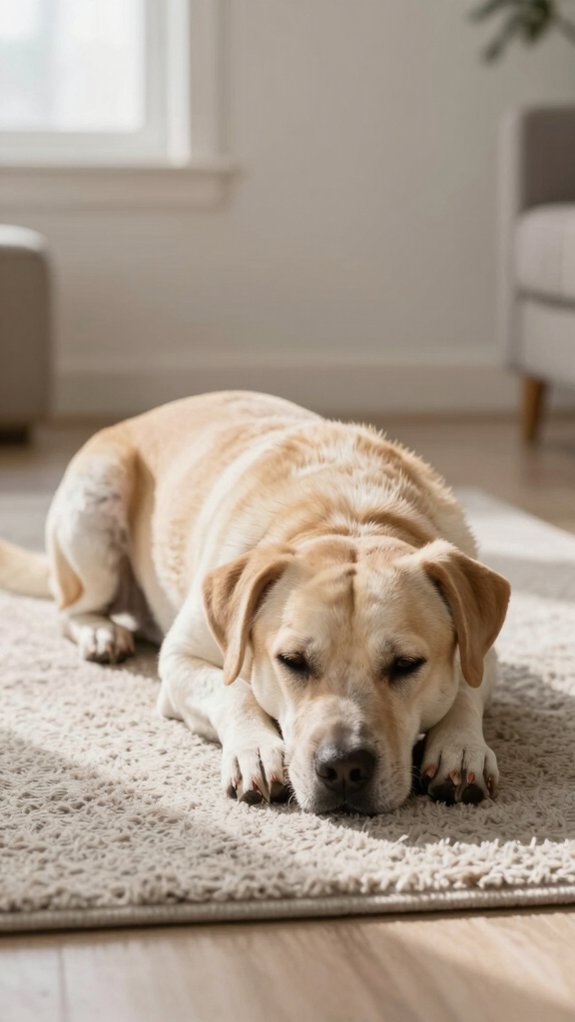
After short, successful sessions at home, the dog should learn the down cue in other environments to prevent location-specific learning. Begin in a backyard, hallway, porch, then a local park, using location proofing to strengthen reliability. Progress only after about 8/10 correct downs in the prior setting.
- Keep sessions brief and positive.
- Use high-value treats in novel areas.
- Add surface variation: carpet, tile, grass, and different body orientations.
If distraction rises, reduce noise or move closer to home, then restart calmly. This gradual method supports confident learning and a strong sense of belonging across places.
Fix Common Down Training Problems
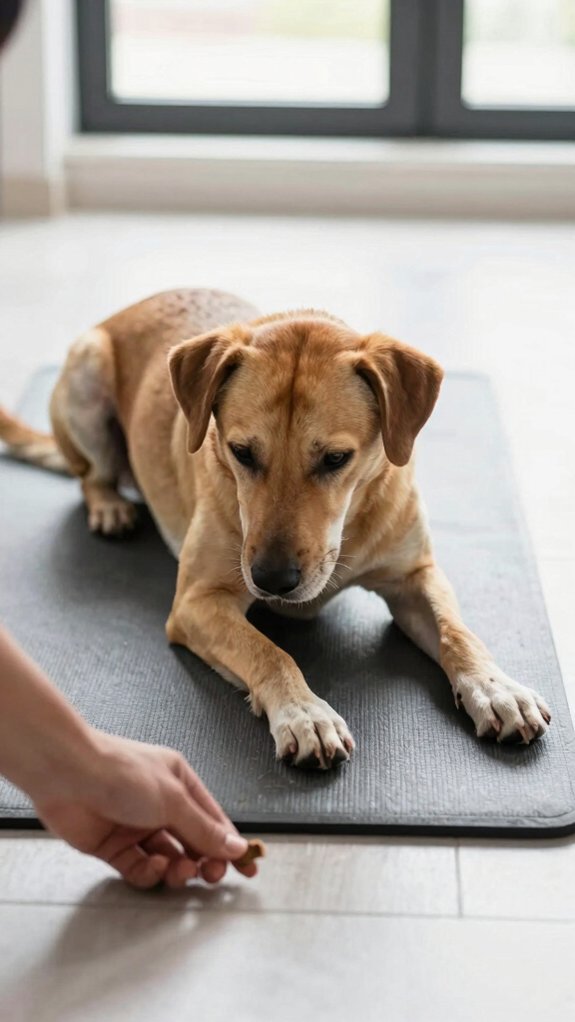
Common down-training failures usually reflect unclear criteria, excessive difficulty, or poorly timed reinforcement. When the dog pushes up, ignores the cue, or hesitates to lie down, the trainer should reset the variables, make the task easier, and reward only cleaner, more complete responses. For dogs that rely too heavily on a lure, the cue should be faded systematically so the down becomes reliable without constant hand guidance.
Why Down Fails
When a dog fails to lie down reliably, the cause is often procedural rather than disobedience: the cue has been taught in only one context, the reinforcement has been mistimed, or the progression has been advanced too quickly. Environmental cues and handler posture must vary so the response transfers beyond one room or surface.
- Reward while the dog is still fully down; do not reinforce standing.
- Reduce distractions and rebuild success before increasing distance, duration, or novelty.
- Shape calmly, avoid force, and add the verbal cue only after the behavior is stable across settings.
Reset Training Variables
Resetting the training variables often resolves persistent problems in the down behavior. An environment reset reduces pressure and restores clarity, helping the dog rejoin success. Criteria adjustment should be deliberate, not abrupt.
| Variable | Reset Action |
|---|---|
| Location | Practice 8–10 reliable downs in a quiet area |
| Distraction | Move from hallway to backyard to park |
| Duration | Reward at 1–2 seconds, then extend |
| Distance | Return frequently and fade away slowly |
| Step | Shape nose to floor, elbows down, full lie |
If the dog ignores the cue, shorten sessions and improve motivators. Calm, exact repetitions support a shared training rhythm.
Reward Cleaner Responses
Cleaner responses are reinforced by rewarding only the fully completed down, with the dog’s elbows and belly on the ground before any click, praise, or treat is delivered. Precise marker timing prevents accidental reinforcement of partial movement.
- If the dog pushes up early, deliver the treat while still down, between chest and front paws, to strengthen staying.
- If the dog sits instead, use position shaping: reward look down, then lower elbows, then full contact.
- Fade lures by using an empty hand and intermittent rewards. Proof the cue across surfaces until roughly 8/10 reliable responses support confident belonging.
Fade The Treat Lure Gradually
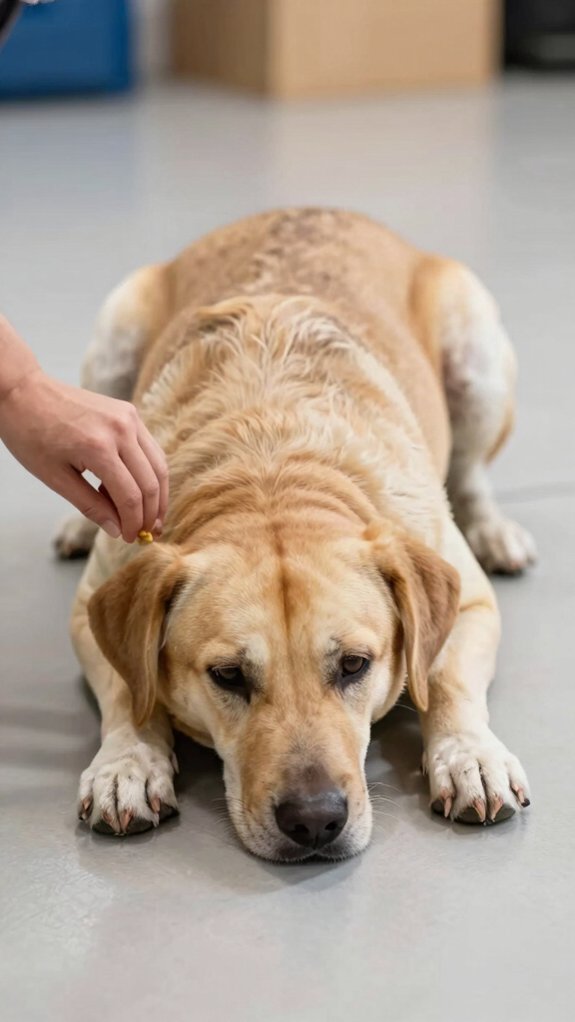
Once the dog reliably lies down in short sessions, typically 8–10 successful repetitions, the treat lure should be faded gradually rather than removed abruptly. Switch reward delivery to the opposite hand and use hand targetting to guide the dog toward the hand signal, not the food. Apply visual fading by replacing the visible lure with an empty downward open-hand motion, then pay from the other hand after the down is completed. Increase empty-hand repetitions in a 1:1, 2:1, then 3:1 pattern. Add “Down” before the gesture, and maintain intermittent high-value reinforcement with praise for the dog’s confidence and belonging.
Proof The Down Around Distractions
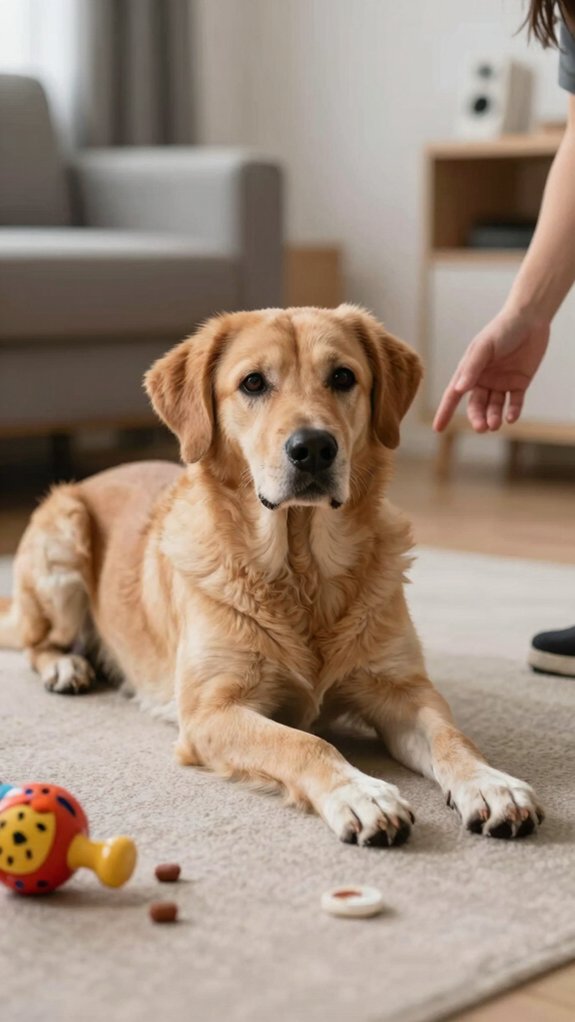
To proof the down, the dog should practice the behavior in at least five distinct locations, such as the home, yard, hallway, car, and park, and should not advance to a more distracting setting until it produces about 8 of 10 reliable responses in the current one. Environmental cues should be varied deliberately: surface, orientation, then mild noises or distant people. Use high-value treats early, then lower-value rewards after stability appears.
- Short sessions, 3–5 minutes.
- Train after exercise.
- If failure occurs, reduce distraction and rebuild before advancing. Emergency signals should remain unaffected.
Frequently Asked Questions
How Long Should a Dog Stay Down Before Getting a Reward?
A dog should stay down only a short duration at first, then receive graduated rewards as duration increases. Calm stillness contrasts with brief success, building reliable compliance while preserving confidence and a sense of belonging.
Can Puppies Learn the Down Cue Safely?
Yes, puppies can learn the down cue safely when puppy physiology and learning stages are respected. Short, gentle sessions with low repetitions, soft surfaces, and rewards support confidence, comfort, and secure participation.
What if My Dog Refuses to Follow the Treat Lure?
If the dog refuses the treat lure, the trainer should try bait alternatives such as toys or markers, while handling resistance calmly. Success usually improves when rewards match preferences and pressure remains minimal, precise, and supportive.
Is It Okay to Teach Down After a Meal?
Yes, typically after meals is acceptable if digestion timing is allowed; however, brief wait periods reduce discomfort. Post exercise, calm settling exercises may better suit training. A veterinary professional should guide cases with sensitive stomachs.
How Do I Know if My Dog Is Uncomfortable Lying Down?
An uncomfortable dog often rises, shifts, or refuses to settle; the body becomes tense, yet the tail may stay still. Watch for stiff posture, rapid breathing, whining, or reluctance to lie fully flat.