
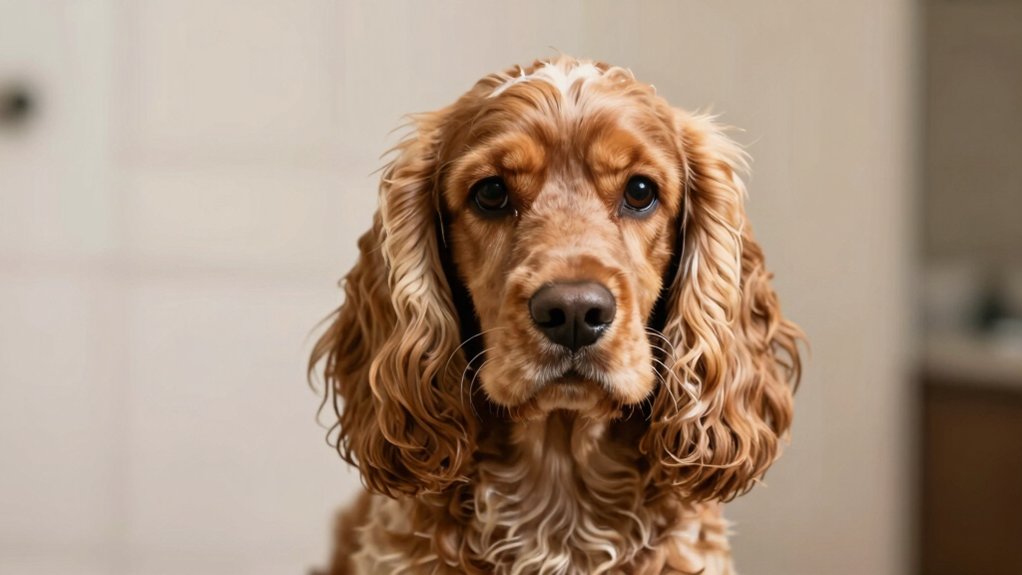
English Cocker Spaniel grooming is simple with a steady routine. Brush daily, or twice daily for a fluffy coat, using a medium slicker brush in the direction of growth. Check ears each day and wipe visible areas weekly with ear cleaner. Trim overlong leg feathers carefully, bathe only when dirty or after swimming, and dry the coat fully. Keep nails short with small, angled cuts. Regular checks help prevent mats, and the guide below explains grooming schedules and techniques.
Disclosure: This post may contain Amazon affiliate links, at no extra cost to you. Content on Pawtangle is created with research support from AI tools and carefully reviewed, edited, and fact-checked by the lead author, Dr.Fahri Pat , to ensure accuracy and reliability. Learn more
Key Takeaways
- Brush daily with a medium slicker, following hair growth, and give extra attention to the skirt, feathering, and longer layers.
- Check ears daily, clean visible areas weekly with dog-safe solution, and never probe deeply or continue if your dog shows pain.
- Trim overlong leg feathers carefully with scissors parallel to the leg, removing burrs and brushing after walks.
- Bathe only when dirty or after swimming; rinse thoroughly, towel-blot, blow-dry completely, and brush when nearly dry.
- Keep nails short using guarded clippers, trimming only 1 mm at a time and seeking professional help for difficult black nails.
Brushing Routine
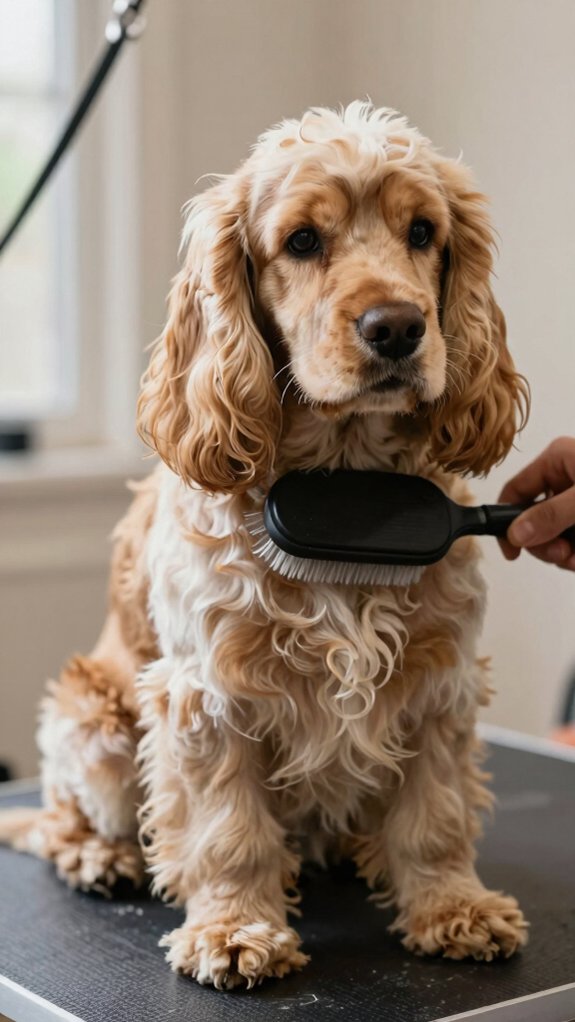
Start with a daily brushing routine, although a fluffier English Cocker Spaniel may need brushing twice a day. Regular brushing helps manage coat shedding and keeps your dog comfortable.
Set up a non-slip grooming area, then use a medium slicker brush. Brush with hair growth, moving from the head down the neck, back, and tail. Brush the sides downward, giving the skirt and longer layers extra attention.
Work through each leg’s feathering so you reach the full coat. If mats appear, use a comb from roots to tips, never yank. Keep sessions calm, limit brushing distractions, and reward your dog as you go.
Ear Care
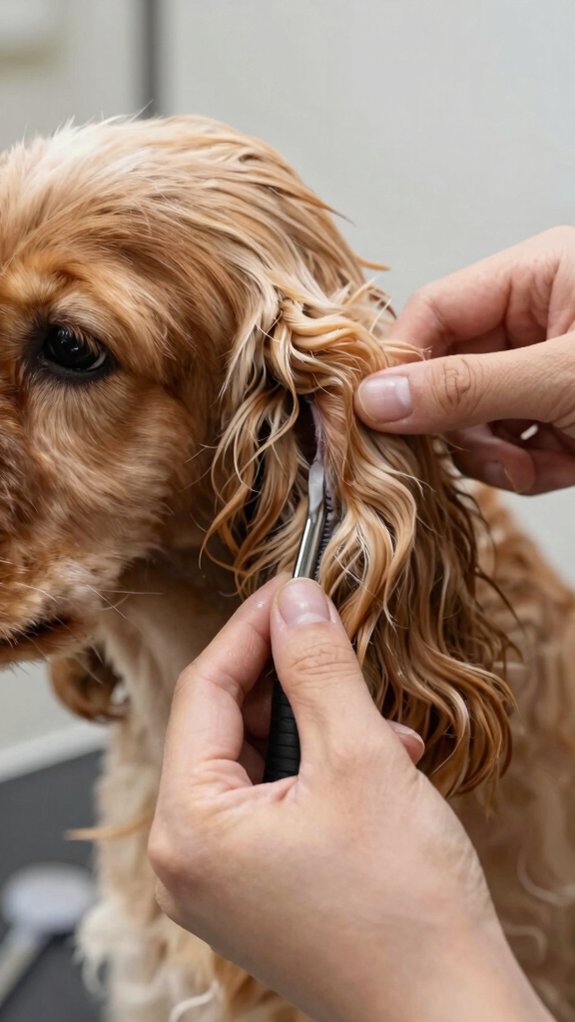
After brushing, check your English Cocker Spaniel’s ears each day for wax, redness, debris, or burrs. This debris inspection helps you notice problems early and keeps your shared routine comfortable.
- Use a cotton pad and a few drops of your usual ear-cleaning solution weekly. Practice gentle wiping around the visible ear, never poking deep.
- Lift each ear and brush around its base, where mats commonly form. If you have a hand-stripped dog, let canal hair grow while you maintain the coat.
- Comb the area regularly, especially after outdoor walks. Consistent combing supports easy burr removal and helps prevent knots.
Stop if your dog shows pain, and seek veterinary advice.
Feather Trimming
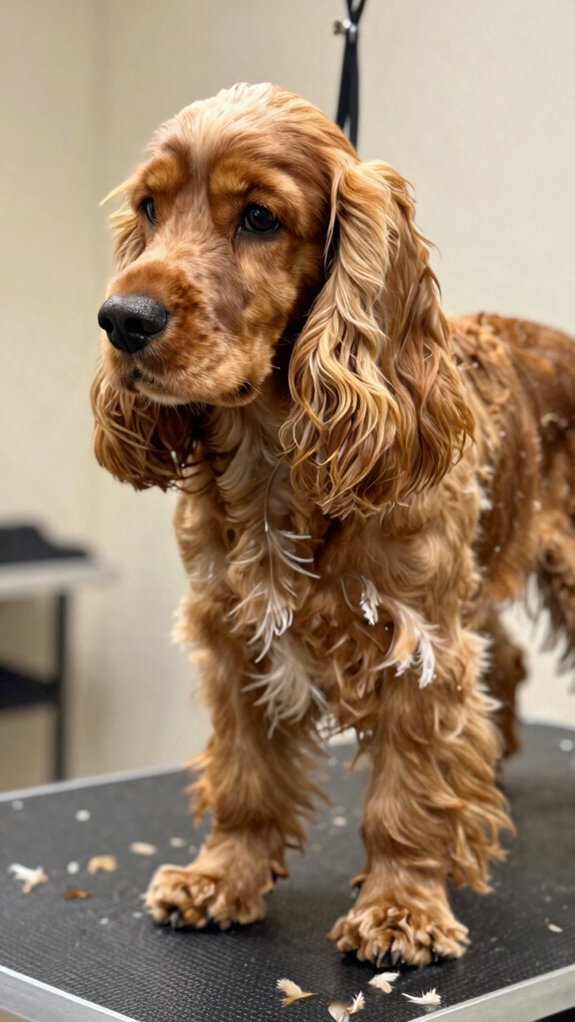
Regularly trim your English Cocker Spaniel’s leg feathering to keep it manageable and reduce the chance of grass seeds, burrs, and tangles getting caught in the fluff. Brush in the direction of growth first, then trim only overlong hairs so the feathers lie neatly and don’t mat.
When front-leg feathering is very thick, don’t force a Coat King through tangles. Use scissors for careful tidying instead. Practice scissor safety by keeping the blades parallel to the leg and working slowly, especially near skin and joints.
After walks, check for seed removal, then blow-dry and brush the feathers to prevent trapped moisture and knots. Avoid shaving the leg, which can change the coat’s condition.
Bathing Schedule
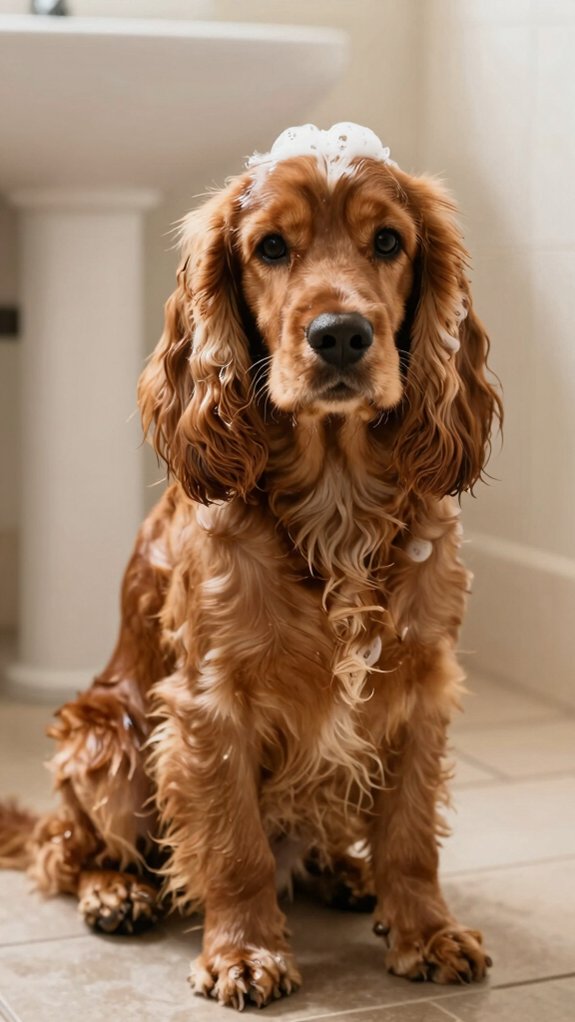
Bathing your English Cocker Spaniel usually isn’t part of a fixed routine unless they’ve rolled in something unpleasant or gone for a swim. For everyday dirt, try waterless cleaning with a damp cloth or dog-safe wipes.
When a full bath is needed, use mild or hypoallergenic shampoo, rinse thoroughly, and follow these steps:
- Towel-blot, then blow-dry right away in the direction of hair growth.
- Make sure the coat dries fully, especially near the skin.
- Brush when it’s almost or completely dry to prevent tangles in the skirt and leg feathering.
Seasonal bathing may include a de-shedding product during spring or autumn.
Nail Care
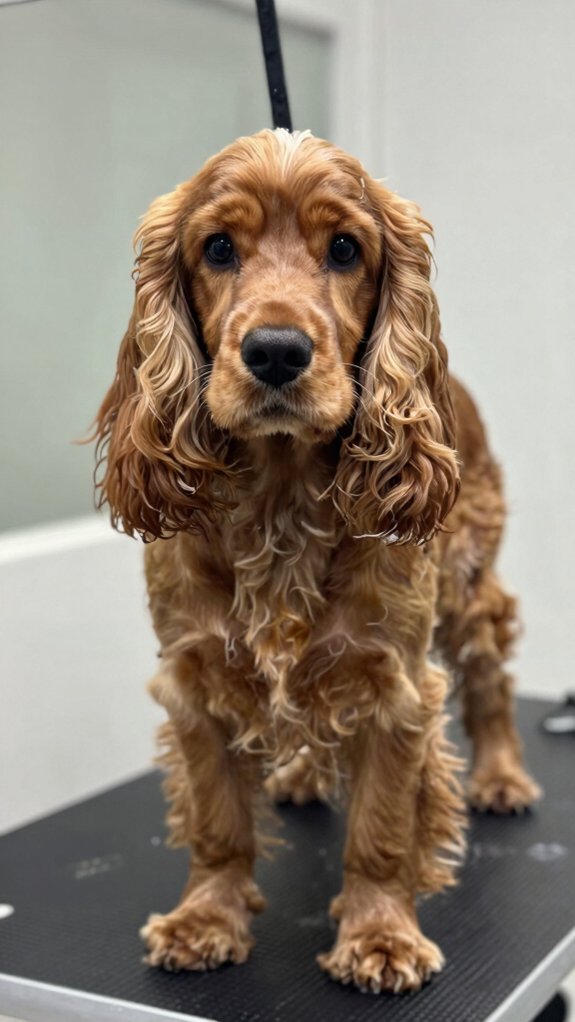
Keep your English Cocker Spaniel’s nails short enough that they don’t click loudly on hard floors or change the way your dog walks. Check them regularly, especially with monthly dew claw checks.
Use guarded clippers, hold them at a 45-degree angle, and trim only 1 mm at a time. For light nails, stay well away from the quick. For black nails, find the dry ridge, trim the ridge-free tip, then stop.
| Nail care | What to do |
|---|---|
| Bleeding | Use styptic options for quick safety and blood clotting. |
| Wiggly dog | Ask a groomer for safe, quick trims. |
Preventing Mats

Daily brushing is your best defense against mats, especially in the skirt, legs, and other areas with long feathering. Brush with coat growth, often twice daily if your dog’s coat is very fluffy.
- Lift the ears and brush their bases daily, then inspect inside for burrs or tangles.
- After rain or swimming, dry the coat fully, blow-drying with growth and brushing when nearly dry.
- Use suitable detangling tools behind ears, in armpits, and across the skirt. During each coat inspection, work roots to tips, easing knots apart instead of pulling. Consistent, gentle care keeps your spaniel comfortable and your routine manageable.
Professional Grooming Timeline
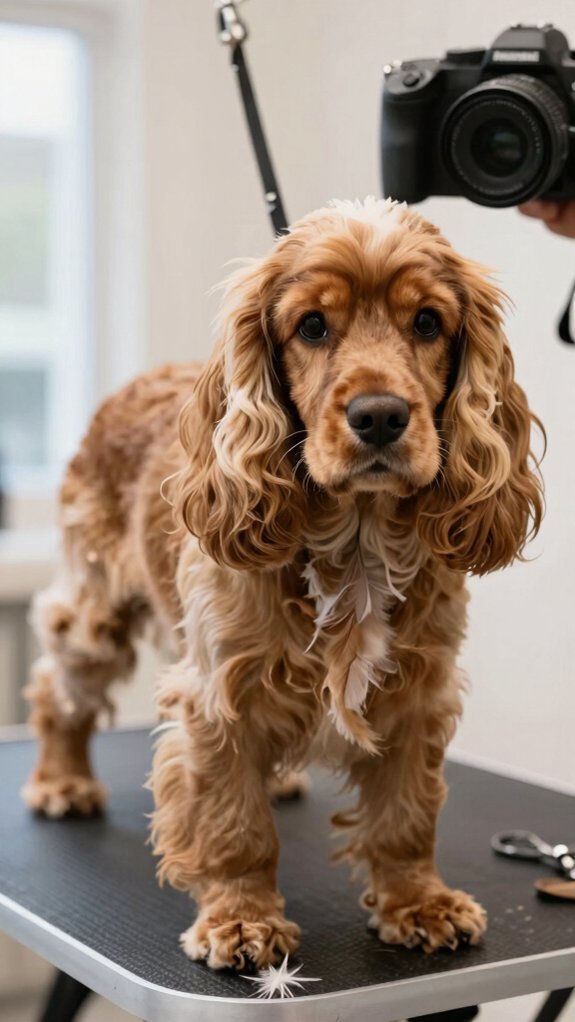
As your English Cocker Spaniel’s puppy coat changes, plan the first adult-coat grooming introduction around 8–12 months. These coat change milestones help you and your groomer choose gentle, timely care.
Around 9–12 months, consider light hand-stripping or Coat King work as the adult coat comes through. Wait until the coat is fully grown, often near one year, before regular major tool work. If you use a Coat King, schedule maintenance every 3–4 weeks, following coat growth and treating ears lightly.
Ask for age-appropriate finishing, including leg feathering and a quiff. Brush regularly for Seasonal shed control, and avoid shaving. Delay neutering until at least 18 months, ideally two years for boys.