Brush your long-haired Dachshund daily when possible, or at least three to four times weekly, using a slicker or pin brush followed by a comb. Bathe them when dirty with warm water and a fragrance-free dog shampoo, then dry the coat fully. Check ears, paws, armpits, legs, chest, and tail for mats, debris, redness, or odor. Trim paw hair and nails carefully, and brush more often during shedding season. The sections below explain each step and useful tools.
Disclosure: This post may contain Amazon affiliate links, at no extra cost to you. Content on Pawtangle is created with research support from AI tools and carefully reviewed, edited, and fact-checked by the lead author, Dr.Fahri Pat , to ensure accuracy and reliability. Learn more
Key Takeaways
- Brush your long-haired Dachshund daily when possible, or at least three to four times weekly, to prevent mats and remove loose hair.
- Brush in sections from head to tail, checking ears, chest, armpits, legs, tail, and undercarriage for hidden tangles.
- Bathe only when dirty using warm water and fragrance-free, dog-formulated shampoo; rinse thoroughly and dry completely.
- Check ears after bathing, cleaning only visible outer folds with veterinarian-approved cleaner; contact your vet for odor, discharge, or persistent scratching.
- Inspect paws regularly, trim pad hair and monthly nails carefully, and moisturize cracked pads when needed.
Brushing Schedule
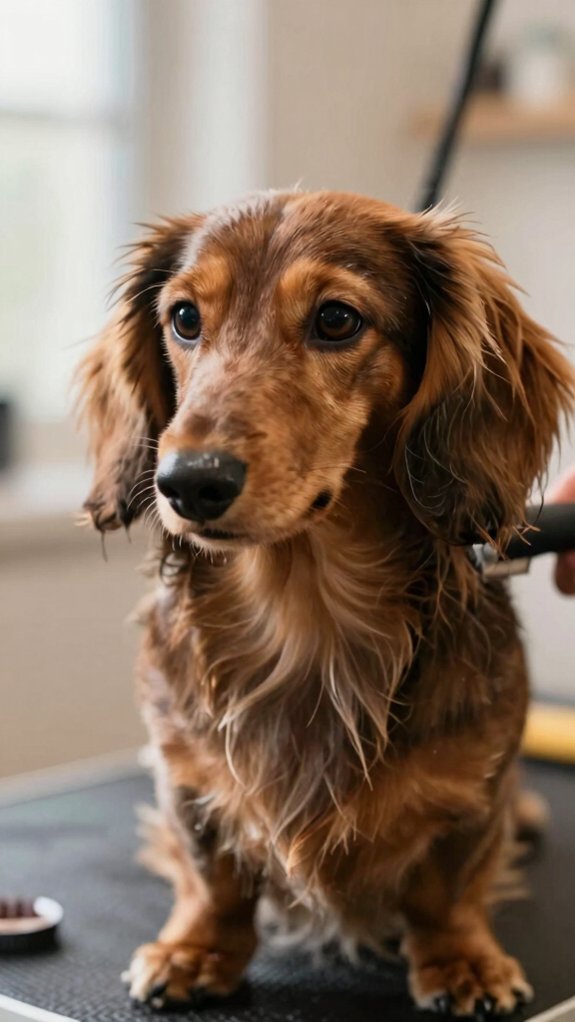
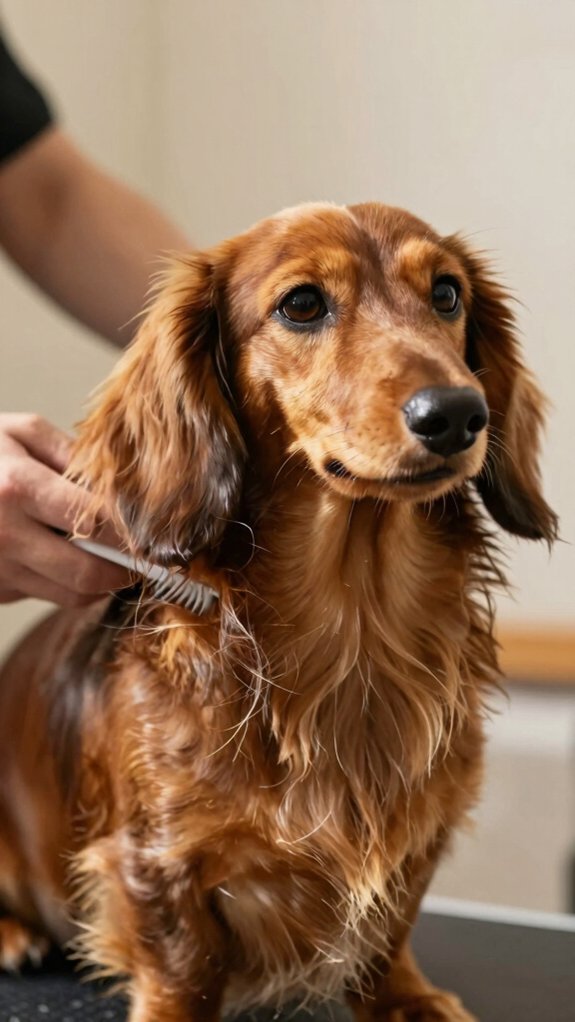
Brush your long-haired Dachshund once a day when possible, or at least three to four times a week, to prevent mats and remove loose hair before it builds up.
This weekly brushing routine helps your dog stay comfortable and keeps you connected through calm, regular care.
Work in sections, combing first, then brushing from the head toward the tail, following hair growth.
Check ears, chest, armpits, tail, and under the legs carefully.
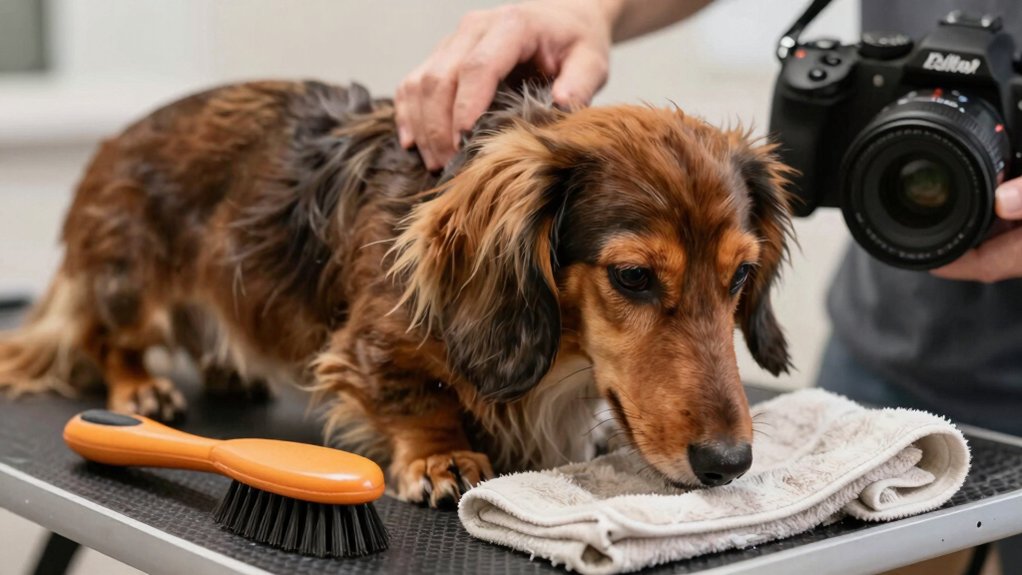
Use gentle strokes with a slicker or metal pin brush, then a comb.
Hold fur at the base near stubborn mats.
Start young, and keep older dogs’ sessions short.
Include coat length monitoring.
Bath Time Tips
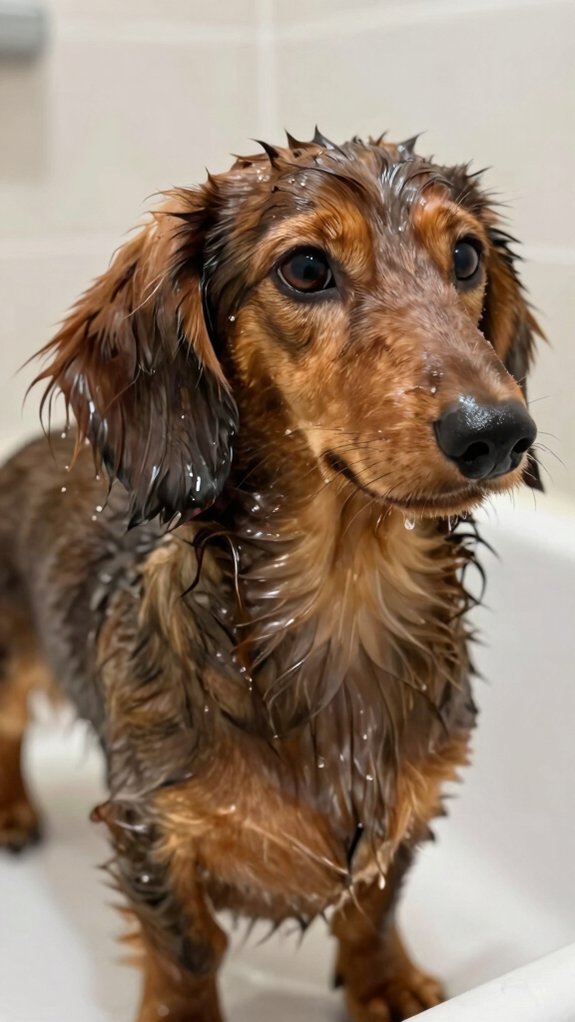
When your long-haired Dachshund gets dirty, give them a bath instead of following a strict schedule. Mud, sticker bushes, or strong odors may call for one, while a clean coat can wait three months.
Over-bathing can remove natural oils and irritate skin.
Use warm, not hot, water.
For shampoo selection, choose a dog-formulated, fragrance-free product with conditioner for long coats. Gently massage the body, avoid the face, and rinse thoroughly.
Wipe the face with a soft cloth and a little shampoo.
Try these drying techniques: towel-dry first, then use a dog-safe dryer on a gentle setting.
Complete drying helps prevent tangles and keeps your shared routine comfortable.
Ear Care
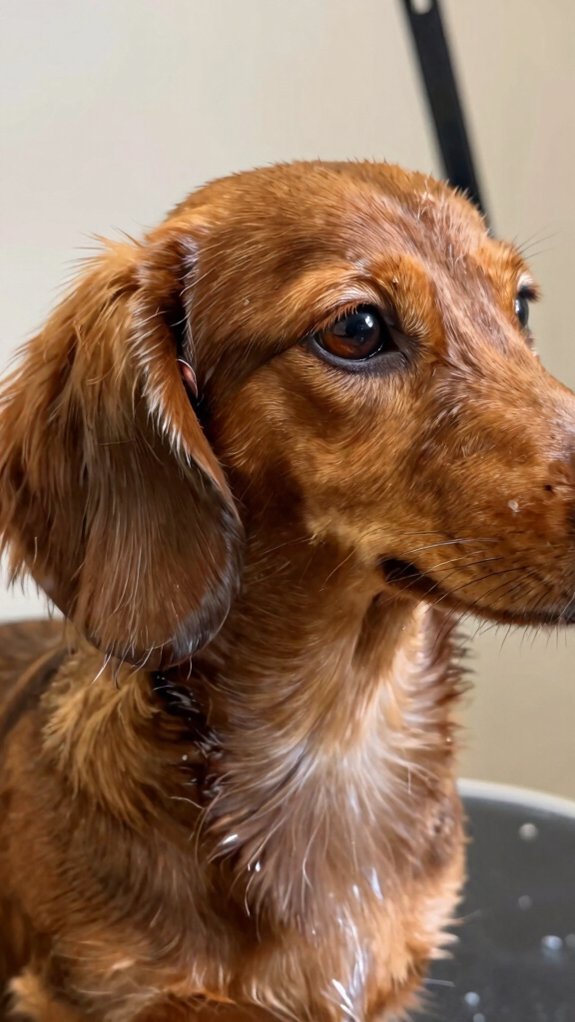
After bath time, give your long-haired Dachshund’s ears a quick check while you’re finishing the grooming routine.
Look for redness, swelling, wax buildup, or a bad smell, since floppy ears can trap moisture and debris.
For wax buildup prevention, use a vet-approved ear cleaner on a cotton pad or wipe.
Gently clean only the visible outer folds, and never push anything into the ear canal.
Carefully remove extra residue, especially around nearby hair, as part of ear safe grooming.
Check regularly, particularly after muddy outdoor play.
If your dog scratches persistently, shakes their head, or has discharge or strong odor, stop grooming and call your veterinarian right away.
Paw Maintenance
Regular paw checks help keep your long-haired Dachshund comfortable and protect their feet from damage. During grooming, inspect each paw, trim foot hair around the pads, and remove dirt, burrs, or trapped moisture.
After walks, wipe their paws and check between the toes for hidden debris. Trim overgrown nails monthly, using small, gradual cuts and avoiding the quick to prevent splitting. These nail comfort tips help your dog walk and grip surfaces comfortably.
Use paw pad moisturizing products when pads feel dry or cracked, especially after cold-weather walks or time on dry pavement. Together, these simple habits keep your companion’s paws healthy.
Feathering Around the Legs
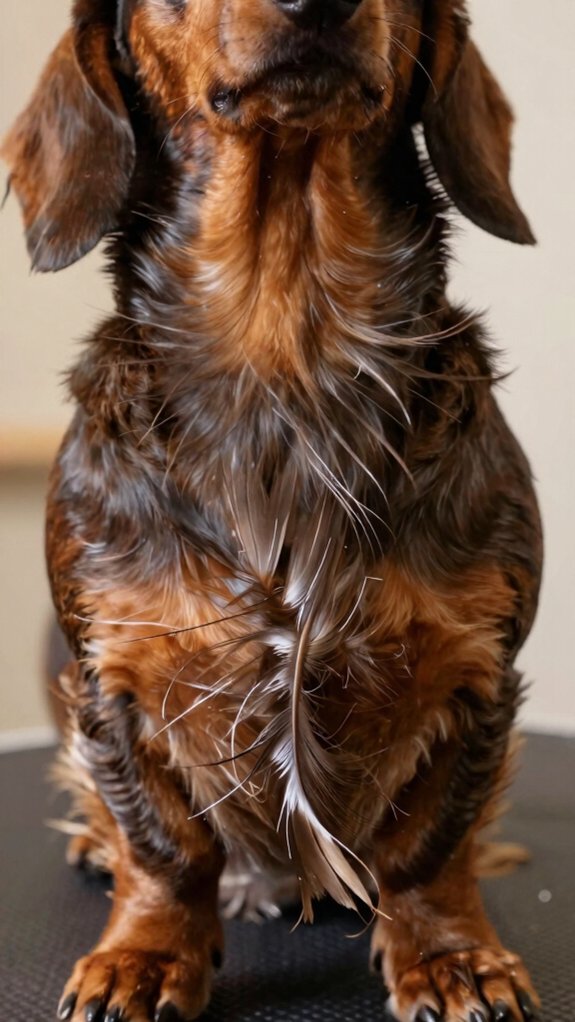
Keep the leg feathering smooth and free of tangles, especially on the backs of the forelegs and around the hocks. Daily mat prevention helps, but brushing two or three times weekly also works.
Use section brushing, following hair growth with a slicker brush to lift loose undercoat. Finish with a bristle brush or comb, moving gently without tugging.
Check the armpits and undersides, where knots can hide and pulling may hurt.
After bathing, pat the legs dry, then use a cool, dog-safe dryer while brushing.
Tease stubborn mats apart from the base with your fingers or comb.
Ask a groomer about severe mats.
Seasonal Shedding
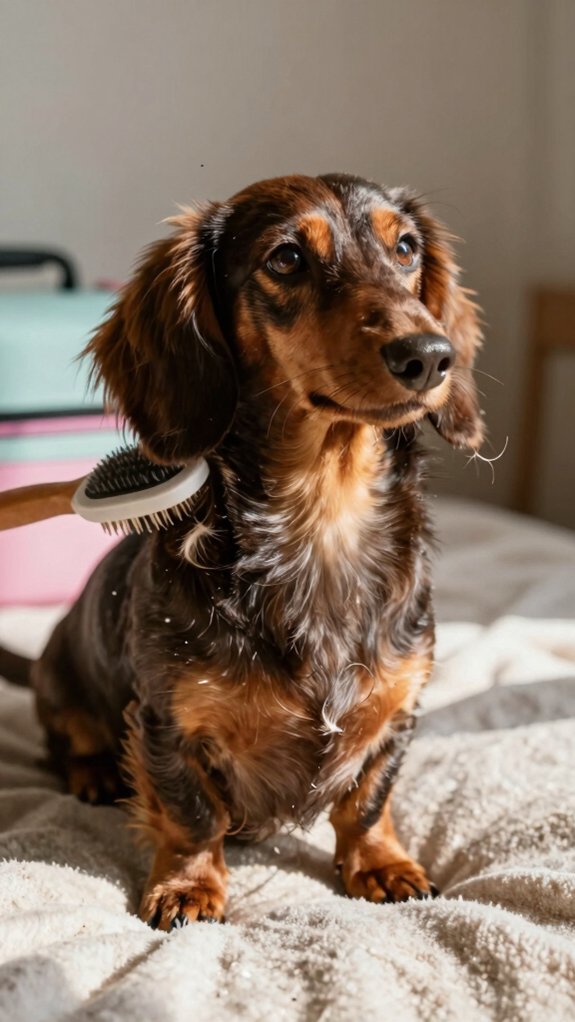
Long-haired Dachshunds often shed more during warmer months, so you’ll likely notice extra fur around the house during the same season each year. This normal pattern follows seasonal changes and helps refresh your dog’s coat.
During shedding season, brush your Dachshund about three to seven times weekly, depending on tangles and matting. Focus on the ears, chest, armpits, legs, and tail, where loose hair can gather quickly.
Regular grooming removes dead undercoat before it builds up, reducing fur on furniture and supporting coat health.
You’ll also help keep the coat smooth, comfortable, and ready for the next season.
Recommended Grooming Tools
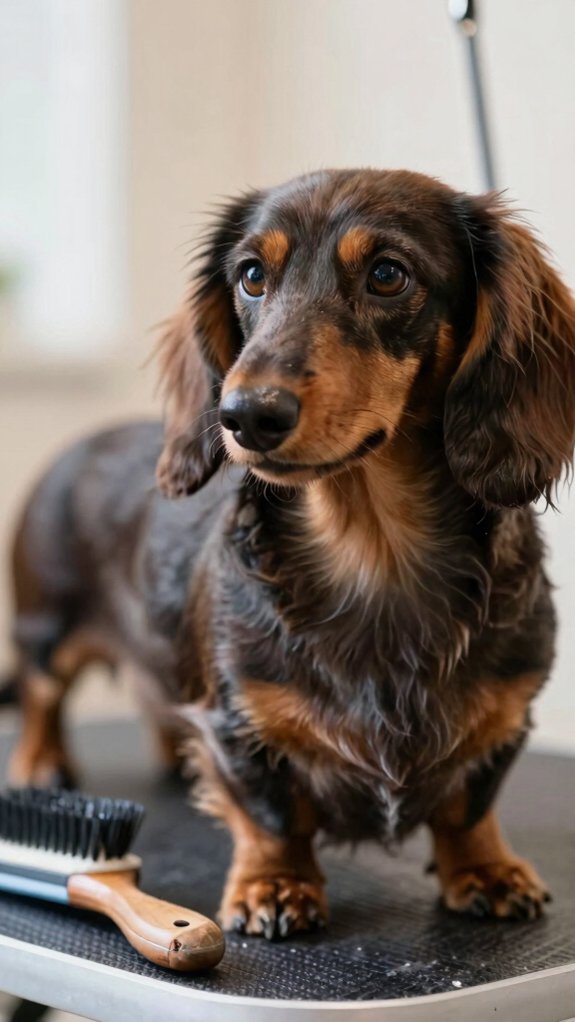
Choosing the right grooming tools makes seasonal shedding easier to manage and helps prevent tangles. Start with a slicker or metal pin brush to loosen undercoat hair, then use a soft bristle brush for shine. Keep a wide-tooth comb nearby for knots around ears and legs.
| Tool | Best use |
|---|---|
| Slicker brush | Loosens undercoat |
| Detangling comb | Works through knots |
Self cleaning tools and de shedding mitts can make loose-hair removal simpler. For heavier shedding, try a double-tooth rake or de-shedder without cutting cover hairs. Use conditioning spray on mats, and add nail clippers plus ear cleaner for complete care.