
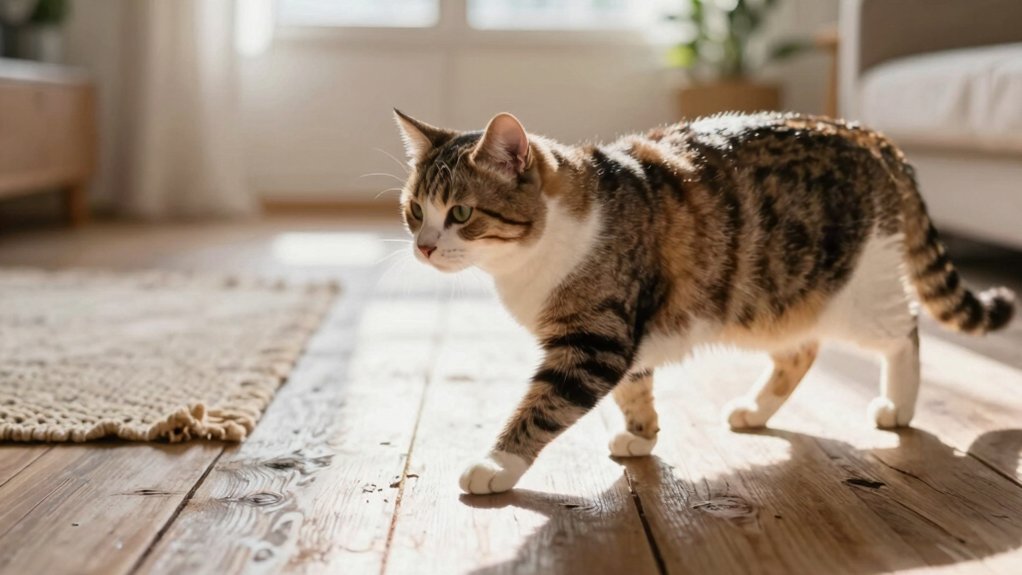
Your cat follows you everywhere because you’re its safe spot, snack boss, and walking mystery! It likes being near you for comfort, curiosity, and routine, especially if you feed, play, or cuddle at set times. Sometimes it’s just saying, “Hey, notice me!” with a tail rub or happy purr. If the shadowing gets clingy, though, watch for stress, appetite changes, or litter box issues. A few easy tweaks can help, and there’s more to uncover next.
Disclosure: This post may contain Amazon affiliate links, at no extra cost to you. Content on Pawtangle is created with research support from AI tools and carefully reviewed, edited, and fact-checked by the lead author, Dr.Fahri Pat , to ensure accuracy and reliability. Learn more
Key Takeaways
- Cats often follow you because being near you feels safe, calm, and comforting.
- They may also shadow you out of curiosity, treating you like a moving mystery to investigate.
- Following can be a routine habit, especially when you handle food, play, or cuddles at predictable times.
- Some cats follow to ask for attention, play, or food, especially near the kitchen or during quiet moments.
- If following becomes clingy or sudden, watch for stress or health changes and consider a vet check.
Why Cats Stay Close to Humans
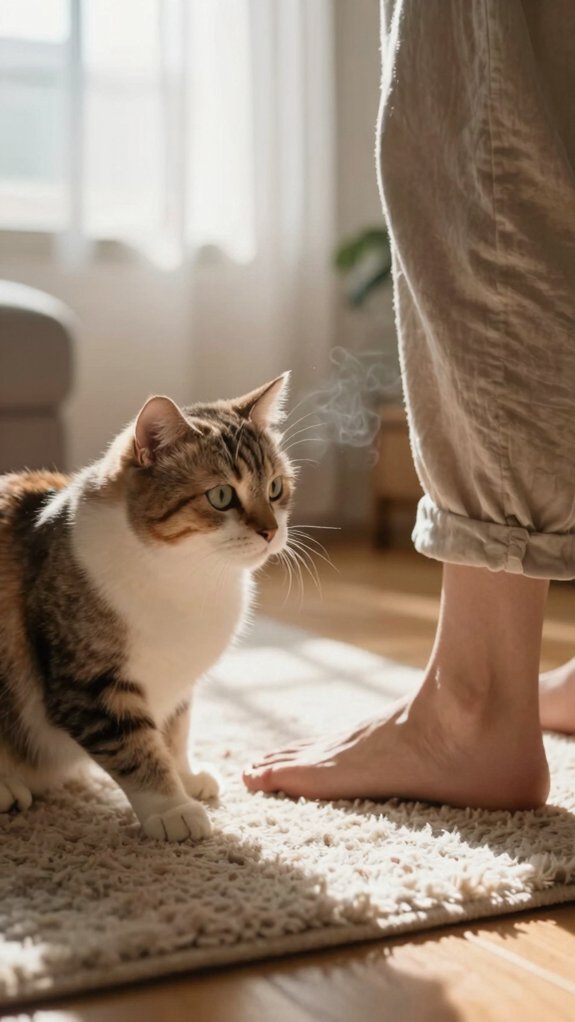
Your cat may stick close because you’re its safe place, and that sweet bonding can look like tailing you from room to room or curling up right beside you.
Sometimes it’s just curiosity at work—what are you doing now, and why is that door suddenly interesting?
And yep, routine matters too, because once your cat links you with meals, treats, or cozy habits, it’ll start showing up like a tiny furry clock!
– Bonding behavior
Cats often follow you around because being close to you makes them feel safe, cozy, and a little bit like they’re back with their mom — adorable, right?
That’s bonding behavior, and it’s one of the sweetest ways your cat says, “You’re my person.”
You might notice them trotting beside you, parking in the same room, or brushing your legs like a fuzzy little shadow.
Playtime bonding and calm body language, like slow blinks or a relaxed tail, can make that closeness grow.
Stick to simple routines, and your cat may stay near just because life feels better with you nearby!
– Curiosity
Why do they keep trailing you from room to room? Because your cat’s curiosity is always on! You might seem like a moving mystery, and your cat wants to solve it with engaging play, scent tracking, and a little doorway exploration.
When you open a door, you hand them a fresh puzzle. They’ll follow, nose high, to check new smells, sounds, and sights, while you provide the safe path.
If you pause, reach, or pick up objects, they may lean in to do some sensory mapping.
Cute, right? That “nosey” vibe is really smart learning, and it helps them feel included!
– Routine attachment
Over time, this can become a sweet habit, especially if your cat learned it early as a kitten, or if one person in the house always brings the cuddles, grooming, and treats at the same times.
You become the safe spot, the one with the pattern, and your cat starts shadowing you for the next meal, bedtime, or playtime signals.
A steady kitchen route, a quick check by the litter box, then back to your feet—cute, right!
Those comfort cues tell your cat, “Yep, life’s on track.”
If the clingy act suddenly ramps up, especially in an older cat, ask your vet.
What Following Behavior Means
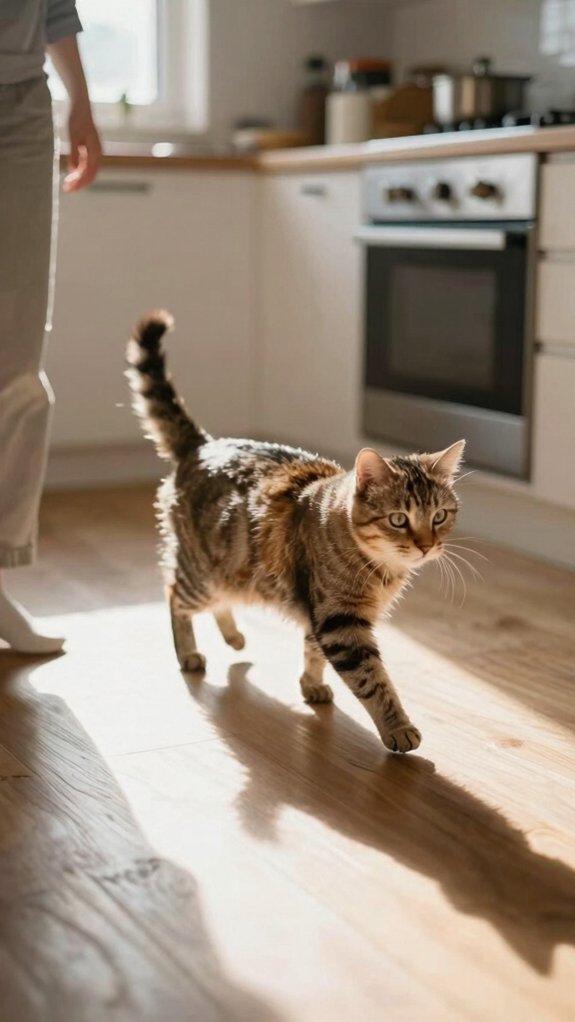
When your cat tails you from room to room, they’re often saying, “Hey, notice me!”—they may want attention, a quick pet, or just a little company.
Sometimes, though, that shadow act means they feel safest when you’re nearby, especially if they’re a kitten, older cat, or just having a nervous day.
And yes, if they suddenly start beelining for the kitchen like a tiny furry snack inspector, they might be expecting food!
– Seeking attention
When your cat pads after you with bright eyes, a happy purr, or a little leg rub, they’re often asking for social time with you—pretty sweet, right?
That follow-the-leader act can mean your cat wants petting, play, or just a bit of your attention, especially if you’re their favorite person in the house.
And here’s the funny part: the more you respond, the more your cat may think, “Yep, my human’s got excellent taste in company!”
Social interaction
Sometimes, your cat follows you around for one simple reason: they want your attention, and they’re not being shy about it!
You’re seeing social bonding, not clingy drama.
A stroll beside you, or a room shared, says “you’re my crew.”
Try Playtime routines, watch Treat response timing, and notice how they calm after petting, chatting, or a quick game.
– Feeling safe
When your cat sticks close, it’s often a trust signal, like saying, “You’re my safe person!” Kittens do this naturally with their mother, and shy or anxious cats may keep up the habit because being near you helps them feel calm.
Instead of frantic clinginess, you’ll usually see quiet company, like walking beside you or looping around your legs, which is a pretty sweet little vote of confidence.
Trust signal
Because your cat sees you as part of their safe little world, following you can be a sweet trust signal, not a clingy alarm bell!
| Closer | Meaning | Feeling |
|---|---|---|
| Near you | Safe companionship | Warm |
| Tiny shadow | Quiet reassurance | Calm |
| Kittens | Comfort habit | Loved |
| Shy cats | Security-seeking | Relief |
| Steady follow | Watchful support | Trust |
If it’s steady, you’re their cozy home base, and that’s pretty adorable!
– Expecting food
If your cat shadows you into the kitchen or pops up right before mealtime, they may be expecting food, and wow, they’re great at making that point!
Cats quickly learn the pattern, too, so if you usually open the fridge or grab a bowl and then dinner appears, they’ll keep checking in like a tiny furry manager.
That habit learning can make them follow you all day, even when their bowl isn’t exactly empty, because in their mind, you might just be the snack dispenser!
Habit learning
Often, a cat that tails you from room to room isn’t being dramatic, it’s learning a pattern: you’re the person who makes food appear!
Those mealtime cues spark food anticipation, so your cat shadows you, especially near the kitchen or at dawn and dusk.
Keep feeding on a steady schedule, or use puzzle toys, and you’ll weaken the habit, while still keeping your buddy happy!
When It Becomes Clingy Behavior
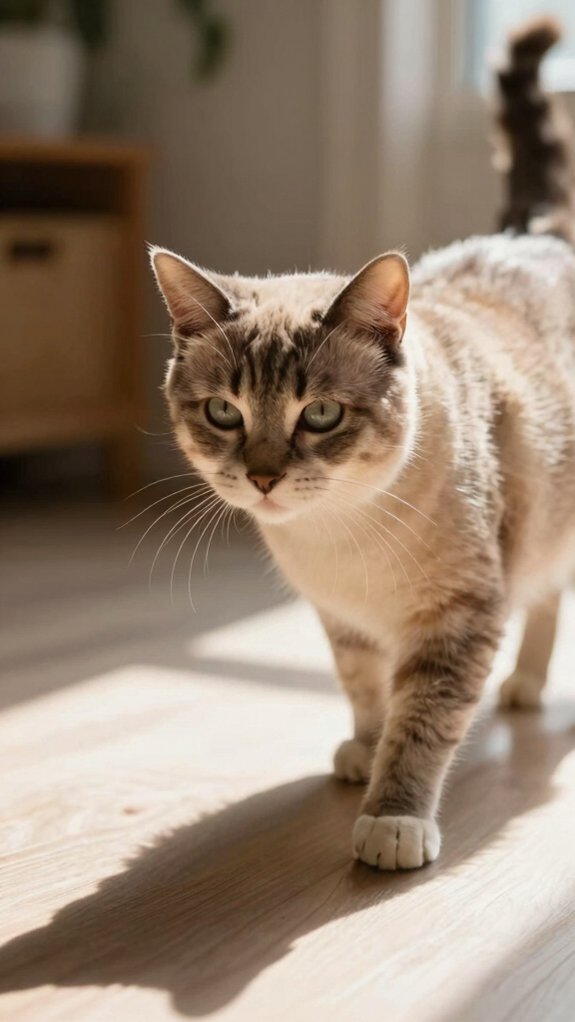
When your cat turns into a tiny shadow that follows you room to room, rubs your legs, and demands nonstop attention, that’s more than cute—it can be clingy behavior.
If you also notice anxiety signs like restlessness or extra meowing, your cat may be looking for reassurance, not just snacks!
And if this new dependency shows up with changes in eating, litter box use, grooming, or sleep, a vet check is the smart next step.
– Constant attention seeking
A lap-seeking shadow can be sweet, because plenty of cats trail you around just to nudge you for pets, chin rubs, or a cozy little nap on your legs.
You may notice your cat pops up for Hunting Play, Human Antics, Territory Marking, Comfort Seeking, Scent Communication, and Calm Presence, like you’re the best show in town!
When that attention gets clingy, your cat may follow room to room, meow, weave between your legs, or appear the moment you sit.
Dawn, dusk, and kitchen trips can trigger food-fueled follow-the-leader too.
If this jumps up suddenly, especially in older cats, book a vet check.
– Anxiety signs
In the space between “sweet companion” and “can’t-attach-me-to-your-leg much longer,” clingy behavior can point to anxiety.
You may notice your cat shadowing you for no clear reason, meowing more, or seeming restless when routines shift—classic behavior triggers, especially with separation stress.
Look for extra grooming, hiding, or a smaller appetite too; these clues often travel together like a tiny worry parade.
If your once-independent cat suddenly sticks close, don’t shrug it off!
New or fast-growing clinginess, especially with vomiting, litter-box changes, or unusual sleep, means it’s time for a vet check.
– Dependency patterns
Sure enough, following you around can be a normal “I like you” cat habit, but it starts feeling clingy when your cat tracks you from room to room, pops up every time you stand still, and seems determined to stay glued to your side even though toys, windows, and cozy beds are all available.
Kittens often do this for safety, and older cats may lean on you more when confidence drops.
Watch for escape anxiety, separation stress, attention fatigue, or overstimulation signs.
If your cat starts meowing nonstop, shadowing you harder, or refusing to settle, food routines may be fueling it.
Sudden changes? Call your vet!
How to Encourage Healthy Independence
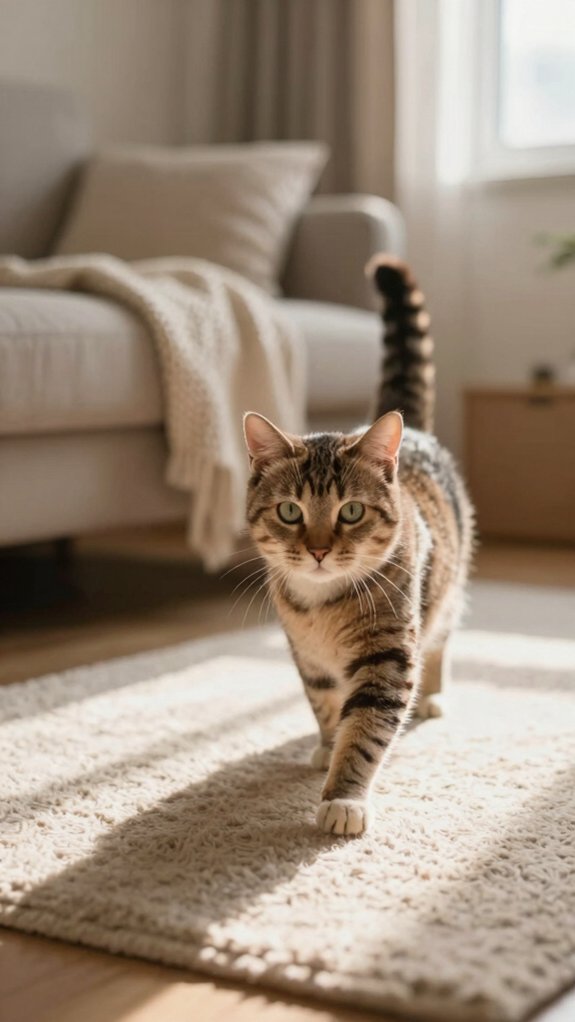
You can encourage healthy independence by making your home more interesting than your heels, with cozy beds, cat shelves, and a few “look at me!” spots where your cat can hang out without babysitting you.
Add engaging play and enrichment like wand toys, puzzle feeders, or food-dispensing toys, because a tired hunter is way less likely to shadow your every step—phew!
Keep a steady routine with regular meals and play times, and reward those quiet solo moments, since your cat should learn that chilling nearby is nice, not mandatory.
– Interactive play
A quick daily play session can work wonders! You can use Play sessions, Wand toys, and Puzzle games in Short bursts, so your cat gets that stalk-and-pounce thrill without glued-to-your-hip drama.
Try Scheduled play for 10 to 15 minutes, then let your cat chase, leap, and “win” the prize. Cute, right?
When your cat starts shadowing you, turn it into Reward hunting: move the wand, let them catch it, and give a tiny treat only after they participate on their own.
That little trick builds confidence fast. Keep rotating toys, and you’ll help your buddy relax, investigate, and enjoy solo time, too!
– Environmental enrichment
When your cat seems glued to your side, it often means their world could use a little more excitement, not more attention from your ankles! Try Playtime variety with wand bursts, ping-pong balls, and rolling toys, plus vertical exploration using scratching posts, shelves, or perches.
Cheap, easy, and cat-approved, these setups give your buddy places to climb, stalk, and snooze.
Add scent enrichment with a cardboard box or a rubbed cloth, and tuck cozy beds into quiet rooms for comfy destination spots.
For a bigger win, use puzzle feeders, then quietly praise your cat when they choose their own space.
Boom—healthy independence!
– Routine balance
A steady routine can work like a calm little roadmap for your cat, and that’s great news for your shins!
Feed, play, and settle down at the same times each day, so your cat stops treating you like a wandering snack cart.
Try Hunger training with a timed feeder or puzzle dish, then give 5–10 minutes of wand play and switch to a food toy.
Easy, cheap, and very doable!
Add a few cozy rest zones near busy paths, so your cat can nap nearby without clinging.
If the following suddenly spikes, or you see litter box, appetite, or hiding changes, schedule vet checkins fast.